

Fruit & Vegetable Washing Line: Complete Solutions for Food Safety Compliance in 2026


Fruit & Vegetable Washing Line: Complete Solutions for Food Safety Compliance in 2026
The global fruit and vegetable processing equipment market, valued at USD 8.72 billion in 2026, is projected to reach USD 11.8 billion by 2031, growing at a CAGR of 6.24% (Mordor Intelligence). Within this expanding market, washing and cleaning equipment represents one of the most critical investments for food processors, as proper cleaning directly impacts food safety, shelf life, and product quality.
For fresh produce processors, selecting the right fruit and vegetable washing line is a fundamental decision that affects compliance with food safety regulations, operational efficiency, and bottom-line profitability. This comprehensive guide explores the complete washing process workflow, cleaning technologies, and emerging trends shaping the industry in 2026.
Why Washing Is the Foundation of Fresh Produce Processing
Washing is far more than simply rinsing produce with water. Modern vegetable washing equipment serves multiple critical functions:
Removal of pesticide residues — Chemical contaminants from agricultural applications must be effectively eliminated
Elimination of pathogenic microorganisms — Bacteria, viruses, and parasites pose serious health risks
Removal of soil, debris, and foreign matter — Physical contaminants affect product quality and consumer acceptance
Surface preparation for further processing — Clean surfaces ensure better adhesion for coatings, waxes, or packaging
Extension of shelf life — Properly washed produce maintains freshness longer throughout the supply chain
With increasing global emphasis on food safety standards and traceability requirements, investment in advanced fruit cleaning equipment has become non-negotiable for serious market participants.
Understanding the Fruit & Vegetable Washing Process: 6 Critical Stages
Modern produce washing lines consist of six fundamental processing stages, each requiring specialized equipment and careful process control.
Stage 1: Pre-Inspection & Sorting
The washing process begins with quality sorting. Fresh produce enters the facility where damaged, diseased, or overripe items are removed before washing. This stage typically involves:
Manual inspection belts for visible defects and foreign matter
Optical sorting systems using cameras and machine vision
Size and weight grading for process optimization
Removing defective produce before washing prevents cross-contamination and reduces water usage by eliminating items that would otherwise require reprocessing.
Stage 2: Pre-Washing / Flotation Separation
Initial washing removes loose soil and debris using low-pressure water sprays or flotation tanks. This preliminary wash prepares produce for more intensive cleaning by:
Loosening attached soil particles
Separating produce by density (flotation method)
Removing leaves, stems, and other lightweight debris
Flotation tanks are particularly effective for root vegetables like carrots and potatoes, where soil removal is the primary concern before more intensive cleaning stages.
Stage 3: Main Washing / Intensive Cleaning
The core washing stage employs various technologies to achieve deep cleaning. Modern industrial produce washing equipment offers multiple cleaning methodologies:
Technology | Method | Key Benefits | Best For |
|---|---|---|---|
High-Pressure Water Spray | Mechanical impact | Physical removal of debris | Leafy greens, firm vegetables |
Bubble Washing | Gentle agitation | Soft on delicate produce | Berries, soft fruits |
Ultrasonic Cleaning | Cavitation bubbles | Reaches microscopic surfaces | Pesticide residue removal |
Ozone Treatment | Oxidation | Kills bacteria, breaks down pesticides | All produce types |
UV-C Disinfection | Light irradiation | Chemical-free sanitization | Surface bacteria reduction |
Ultrasonic cleaning technology has gained significant attention in 2026 for its ability to remove pesticide residues and microscopic contaminants that traditional washing methods cannot address. The technology uses high-frequency sound waves to create microscopic bubbles that implode on produce surfaces, loosening even the most stubborn residues.
Stage 4: Rinse & Sanitization
After intensive cleaning, produce undergoes a final rinse with sanitized water to remove any cleaning agent residues. This stage is critical for:
Removing residual cleaning chemicals or solutions
Final sanitization using food-safe agents
Temperature optimization for storage requirements
Sanitization options include chlorinated water, peroxyacetic acid, and ozone. Each method has specific dosing requirements and contact times that must be carefully controlled to ensure effectiveness while meeting regulatory limits.
Stage 5: Drying & Water Removal
Proper drying is essential for maintaining product quality and extending shelf life. Wet produce is susceptible to microbial growth and rapid deterioration. Modern produce drying equipment includes:
Centrifugal dryers for leafy greens and herbs
Air knife systems for firm vegetables
Vacuum drying for specialty applications
Combined air circulation dryers for gentle, uniform drying
Residual moisture content should typically be reduced to below 5% for optimal storage stability, though specific requirements vary by produce type and intended use.
Stage 6: Post-Wash Inspection & Packaging
The final stage ensures only quality produce proceeds to packaging. Automated inspection systems verify:
Cleanliness standards are met
No recontamination has occurred
Product meets visual quality specifications
Packaging should occur quickly after washing and drying to prevent recontamination and moisture absorption. Many facilities implement modified atmosphere packaging (MAP) to further extend shelf life.
Key Equipment Components in a Modern Washing Line
When selecting fruit vegetable washing equipment, consider these critical components:
Equipment Category | Key Functions | Capacity Range |
|---|---|---|
Conveyor Systems | Transport produce through washing stages | 500-10,000 kg/hour |
Washing Tanks | Deep cleaning with agitation | 500-5,000 liter capacity |
Spray Systems | High-pressure rinsing and cleaning | Adjustable pressure (2-20 bar) |
Ozone Generators | Sanitization and pesticide breakdown | 5-50 g/hour output |
Ultrasonic Units | Microscopic cleaning action | 1-10 kW power range |
Drying Systems | Moisture removal | 500-8,000 kg/hour |
2026 Industry Trends Shaping Produce Washing
1. Water Conservation Drives Recycling Innovation
With water scarcity becoming a critical global issue, produce processing facilities are increasingly investing in closed-loop water recycling systems. Modern washing lines incorporate multi-stage filtration that allows water reuse while maintaining sanitation standards. Some facilities achieve 70-80% water savings through proper recycling, significantly reducing both costs and environmental impact.
2. Chemical-Free Cleaning Technologies Gain Traction
Consumer preference for chemical-free produce has accelerated adoption of physical cleaning technologies. Ozone, ultraviolet light, and plasma-based treatments are replacing traditional chlorinated systems in many facilities. These technologies eliminate chemical residues while providing equivalent or superior microbial reduction.
3. IoT Integration Enables Real-Time Process Monitoring
Smart washing systems with sensors and connectivity are transforming quality control. Modern equipment monitors pH levels, turbidity, flow rates, and sanitization efficacy in real-time. Automatic adjustments maintain optimal cleaning performance while alerting operators to anomalies before quality issues develop.
4. Modular Designs Enable Scalable Investment
To accommodate varying production scales and budget constraints, manufacturers offer modular vegetable washing equipment that can be expanded over time. Processors can start with essential stages and add advanced technologies as demand grows, spreading capital investment across multiple budget cycles.
5. Traceability Requirements Drive Digital Integration
Regulatory compliance and retail requirements demand complete traceability from field to consumer. Modern washing lines integrate with enterprise systems to record water quality, sanitization dosing, temperature profiles, and operator actions for each production batch. This data supports both compliance documentation and quality improvement initiatives.
Selecting the Right Washing Line for Your Operation
Choosing the appropriate fruit vegetable washing line depends on several key factors:
Consideration | Small-Scale (500-2 tons/hr) | Medium-Scale (2-5 tons/hr) | Large-Scale (5+ tons/hr) |
|---|---|---|---|
Investment Level | Entry-level semi-automatic | Moderate automation | Full automation with IoT |
Cleaning Technology | Water spray + bubble | Add ozone/ultrasonic | Multi-technology integration |
Water Consumption | 2-4 liters/kg produce | 1-2 liters/kg produce | 0.5-1 liter/kg produce |
Labor Requirements | Higher manual input | Moderate staffing | Minimal operators |
Common Mistakes to Avoid in Washing Line Selection
⚠️ 5 Critical Errors When Investing in Produce Washing Equipment:
Underestimating water quality requirements — Water hardness, pH, and microbial content all affect washing efficacy
Ignoring produce-specific needs — Delicate berries require gentler treatment than root vegetables
Neglecting sanitation validation — Equipment must be validated to achieve required microbial reduction
Overlooking drying capacity — Washing without adequate drying creates quality and safety issues
Skipping pilot testing — Test your specific produce varieties under real conditions before full commitment
Frequently Asked Questions
What is the water consumption rate for fruit and vegetable washing?
Modern washing lines achieve 1-3 liters of water per kilogram of produce, with advanced recycling systems reducing this to 0.5-1 liter. Traditional systems may consume 4-6 liters per kilogram.
Can washing equipment handle both fruits and vegetables?
Yes. Multi-purpose produce washing lines can be configured for different products by adjusting spray pressure, water flow, and contact times. However, dedicated lines may be preferable for facilities processing large volumes of both categories.
How effective is ultrasonic cleaning for pesticide removal?
Ultrasonic cleaning can remove 60-90% of surface pesticide residues, depending on produce type, pesticide formulation, and treatment duration. Combined with ozone or chemical cleaning, removal rates exceed 95% for most common agricultural chemicals.
What certifications are required for washing equipment?
Equipment should comply with relevant food safety standards including FDA regulations, EU Machinery Directive, and ISO food equipment standards. Materials in contact with food must be food-grade stainless steel or approved polymers.
How do I maintain optimal hygiene in a washing line?
Regular sanitation cycles, daily water quality monitoring, wear part inspection, and preventive maintenance are essential. CIP (Clean-in-Place) systems automate sanitation for continuous operation facilities.
Ready to Upgrade Your Produce Washing Operations?
SD Henger Group offers comprehensive fruit and vegetable washing line solutions designed for your specific capacity requirements, produce types, and food safety compliance needs. Our engineering team provides end-to-end support from process design to installation and validation.
Contact us today for a detailed consultation and customized quotation.
Conclusion
The fruit and vegetable washing line market continues to evolve with technological advancements that improve cleaning efficacy, water efficiency, and food safety compliance. As regulatory requirements tighten and consumer expectations for clean, chemical-free produce increase, investment in modern washing technology becomes essential for market competitiveness.
Whether you're establishing a new processing facility or upgrading existing operations, understanding the complete washing workflow—from pre-inspection to final packaging—is fundamental to making informed equipment decisions. With proper planning, technology selection, and process optimization, your washing line can deliver the clean, safe produce that today's markets demand.
For more information about fruit and vegetable washing equipment and customized processing solutions, explore our complete range of produce processing machinery or contact our technical team for a detailed consultation.
Related News
-
-
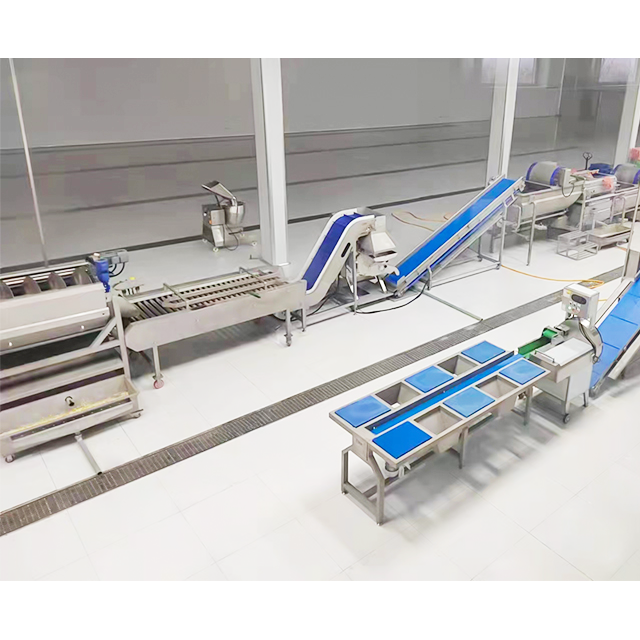 This article explores fruit and vegetable washing line design for 2026, focusing on organic produce compliance, post-wash drying, and optical sorting. It compares bubble, brush, spray, and ultrasonic washing technologies; explains air-knife and centrifugal drying; outlines four capacity tiers; and identifies five industry trends and five common purchasing errors. The guide is written for processors serving organic, fresh-cut, and export markets who need practical, mechanical equipment selection advice.Industry Insights
 -
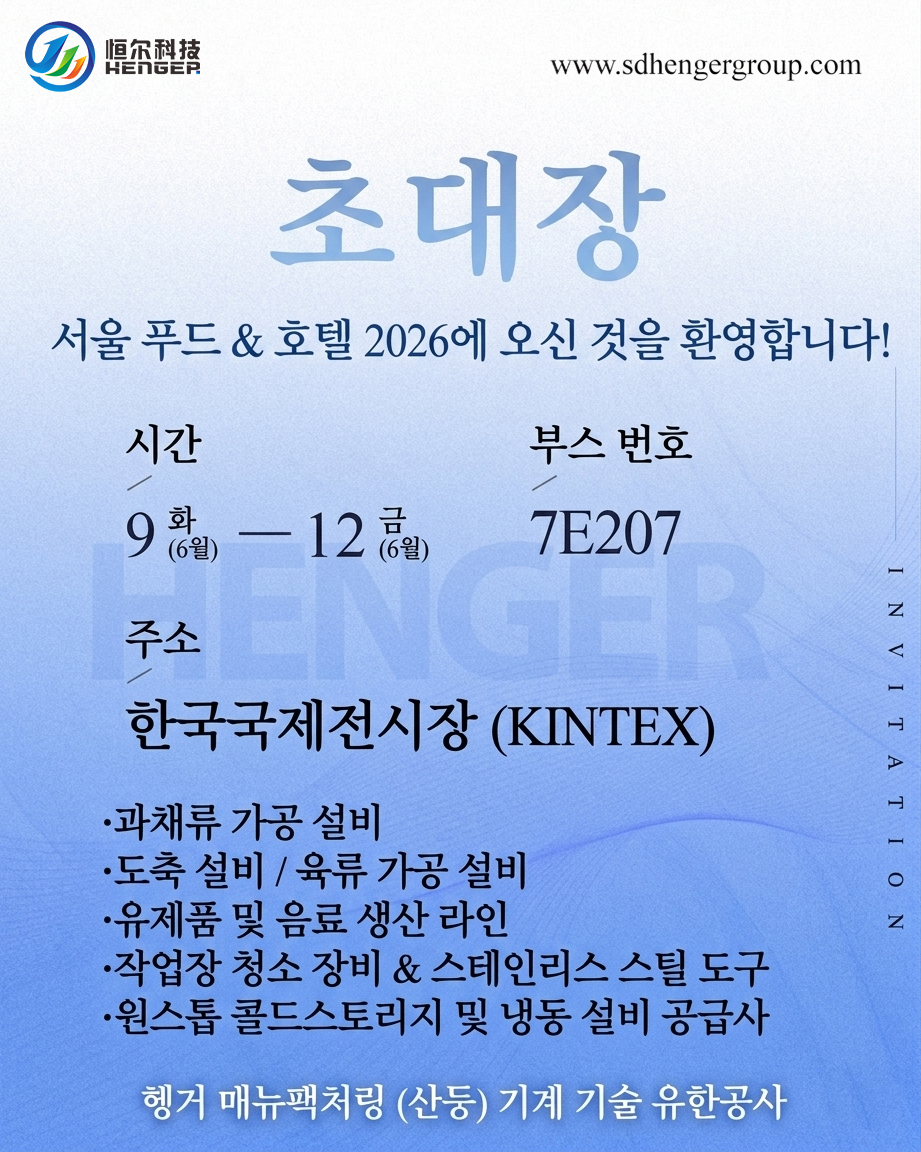 You're Invited: Meet Henger at Seoul Food & Hotel 2026!안녕하세요,We are thrilled to invite you to connect with Henger Manufacturing (Shandong) Machinery Technology Co., Ltd. at the upcoming Seoul Food & Hotel 2026, the premier food processing and hospitality industry event in South Korea! Event DatCompany Dynamic
