

UHT Milk Processing Line: Complete Solutions for Long-Life Dairy Products in 2026


UHT Milk Processing Line: Complete Solutions for Long-Life Dairy Products in 2026
The global dairy landscape is undergoing a quiet but powerful transformation. Valued at USD 5.23 billion in 2025, the global UHT (Ultra-High Temperature) processing market is on track to reach USD 9.39 billion by 2034, growing at a CAGR of 6.73%. Behind this number lies a simple, compelling reality: consumers everywhere want nutritious, safe, and convenient dairy products—and they want them to last.
For dairy processors, the implication is clear. A modern UHT milk processing line is no longer a nice-to-have; it is a strategic asset that determines how far your products can travel, how long they can stay on the shelf, and how efficiently your operation can scale.
In this guide, we will walk through what a complete UHT milk processing line looks like in 2026, the key equipment involved, realistic automation options, and the trends shaping procurement decisions this year.
- Understanding UHT Technology and Its Market Momentum
- Key Stages of a Complete UHT Milk Processing Line
- Essential Equipment Components
- Automation Levels in Modern UHT Lines (2026 Reality)
- Industry Trends Shaping UHT Processing in 2026
- Selection Criteria for UHT Processing Equipment
- Five Common Procurement Mistakes (and How to Avoid Them)
Understanding UHT Technology and Its Market Momentum
UHT processing involves heating milk (or other liquid dairy products) to a temperature above 135°C (typically 135–150°C) for a short time—usually 2 to 5 seconds—then rapidly cooling it. This process achieves commercial sterility, eliminating harmful bacteria while preserving most nutritional properties. When combined with aseptic filling, UHT milk can be stored at room temperature for 6 to 12 months without preservatives.
Several factors are driving accelerated adoption in 2026:
Urbanization and changing consumption patterns. As urban populations grow across Asia, Africa, and Latin America, demand for shelf-stable milk that does not require cold-chain infrastructure is rising fast.
Retail expansion into non-traditional channels. Convenience stores, kiosks, and e-commerce platforms prefer UHT products because they reduce spoilage risk and simplify logistics.
Protein ingredient boom. Recent major investments in protein ingredient production (such as FrieslandCampina's €90 million commitment announced in May 2026) highlight how dairy processors are doubling down on high-value, shelf-stable protein products—many of which rely on UHT processing as a core technology.
Cold-chain cost pressures. In many emerging markets, maintaining an unbroken cold chain from processing plant to retail shelf remains expensive and unreliable. UHT processing offers a practical alternative that expands market reach without requiring massive refrigerated logistics investments.
Key Stages of a Complete UHT Milk Processing Line
A well-designed UHT milk processing line integrates several stages, each contributing to product safety, quality, and efficiency.
1. Raw Milk Reception and Pre-Treatment
The process begins with receiving raw milk, which is filtered, cooled, and stored in refrigerated silos. Pre-treatment typically includes:
- Clarification: Removing solid impurities and sediment
- Standardization: Adjusting fat and solid content to meet product specifications
- Homogenization (pre-UHT): Reducing fat globule size for improved stability and mouthfeel
These steps are mechanically straightforward but critical—inconsistent pre-treatment directly affects final product quality.
2. UHT Heat Treatment
The core of the line. Milk flows through a heat exchanger where it is rapidly heated to 135–150°C, held for 2–5 seconds, then quickly cooled. Two primary heating methods are used:
- Indirect heating (plate or tubular heat exchangers): The most common configuration, suitable for standard milk products. Lower capital cost and easier maintenance.
- Direct heating (steam injection or infusion): Steam is injected directly into the milk or vice versa, enabling faster heating and often better flavor retention. Preferred for premium products but at higher cost.
In 2026, many processors are opting for indirect plate systems for their balance of performance and affordability—particularly relevant for equipment sourced from experienced manufacturers, where robust, moderately automated designs deliver reliable results at a competitive total cost of ownership.
3. Holding and Cooling
After heating, milk passes through a holding tube (designed to ensure the required dwell time) and is then rapidly cooled via regenerative heat exchange (recovering energy from the incoming raw milk) followed by final cooling with chilled water or glycol.
Efficient heat recovery is a key economic factor—modern lines recover 90% or more of thermal energy, significantly reducing operating costs over the life of the equipment.
4. Aseptic Surge and Filling
The sterile milk is held in an aseptic surge tank before being filled into pre-sterilized containers. Aseptic filling systems maintain a sterile environment throughout the filling process, using technologies such as hydrogen peroxide sterilization for packaging materials or UV sterilization for caps and closures.
A complete UHT line is only as strong as its aseptic filling integration—any breach in sterility here compromises the entire process.
5. CIP (Clean-in-Place) System
Integrated CIP systems automate cleaning and sanitization of the entire line without disassembly. This is essential for food safety compliance and minimizing downtime between production runs. Modern CIP systems use conductivity monitoring to verify detergent concentration and confirm rinse completeness.
Essential Equipment Components
| Component | Function |
|---|---|
| Raw milk receiving filter | Removes debris and large particles |
| Storage silos with agitators | Temperature-controlled raw milk holding |
| Centrifugal clarifier | Removes sediment and impurities |
| Fat standardization unit | Adjusts fat content to specification |
| Homogenizer | Breaks down fat globules for stability |
| UHT heat exchanger (plate or tubular) | Core sterilization step |
| Holding tube | Ensures required sterilization time |
| Flash cooling system | Rapid post-heat treatment cooling |
| Aseptic surge tank | Buffer between sterilization and filling |
| Aseptic filling machine | Fills sterile product into sterile packages |
| CIP system | Automated cleaning without disassembly |
| Control panel / PLC system | Monitors and controls process parameters |
Automation Levels in Modern UHT Lines (2026 Reality)
When selecting a UHT processing line, automation level is one of the most important—and most misunderstood—decision points. It is important to match automation to your actual operational needs and technical support capabilities.
| Level | Key Features | Best For |
|---|---|---|
| Basic (Manual-Assisted) | Manual valve operations; local control panels; manual CIP initiation; operator physically verifies each stage | Small-scale plants, start-ups, low-skilled labor environments |
| Entry-Level (Automatic) | Central PLC control; automated CIP with recipe selection; digital temperature/flow monitoring with alarms; semi-automatic filling integration | Medium-scale plants, regional dairies |
| Moderate (Recommended Sweet Spot) | Full PLC + HMI touchscreen; SCADA real-time monitoring; automated product flow diversion; recipe management; IoT-enabled remote monitoring (basic) | Established processors targeting consistent quality and moderate labor savings |
| High (Premium) | Fully automated CIP with self-validation; advanced SCADA with data logging; remote diagnostics; MES integration-ready; automatic sampling stations | Large-scale operations with skilled technical teams |
Reality check: In 2026, the majority of successfully deployed UHT lines from established Chinese equipment manufacturers fall into the Entry-Level to Moderate Automation range. This is not a limitation—it is a practical sweet spot that balances capability, reliability, and total cost of ownership. Over-specifying automation can lead to operational challenges if local technical support or skilled operators are limited.
Industry Trends Shaping UHT Processing in 2026
Trend 1: Modular and Scalable Line Designs
More processors are choosing modular UHT lines that can be expanded as demand grows. A modular approach allows adding a second homogenizer, expanding heat exchanger capacity, or integrating additional filling heads without a complete line replacement. This protects the initial investment and aligns capital expenditure with actual business growth.
Trend 2: Energy Efficiency as a Selection Criteria
With rising energy costs globally, heat recovery efficiency has become a key selection factor. Modern UHT systems with optimized plate designs and regenerative cooling can recover over 90% of thermal energy—a meaningful operating cost advantage over the life of the equipment. When comparing quotations, ask for a thermal balance sheet showing energy consumption per liter processed.
Trend 3: Aseptic Filling Format Diversification
UHT milk is no longer limited to traditional cartons. In 2026, aseptic filling lines support a wide range of formats: bottles (PET, HDPE), pouches, bags-in-boxes, and portion-size cups. This diversification allows brands to differentiate on shelf and target specific consumer segments, from school feeding programs to premium retail.
Trend 4: Digital Monitoring and Traceability
Even at moderate automation levels, basic digital monitoring is becoming standard. Temperature logs, flow rates, and sterilization time records are automatically stored and can be exported for compliance audits—a meaningful upgrade from paper-based records. For export-oriented processors, this digital traceability is increasingly a customer requirement.
Trend 5: Protein-Focused Product Expansion
The protein ingredient investment wave (highlighted by recent major dairy company commitments in May 2026) is trickling down to processing equipment selection. UHT lines capable of handling high-protein formulations, fortified milk, and nutritional beverages are seeing increased demand. If your product roadmap includes protein-fortified SKUs, ensure your homogenizer and heat exchanger are sized accordingly.
Selection Criteria for UHT Processing Equipment in 2026
Choosing the right UHT processing line requires balancing technical, commercial, and operational factors. Here are the key criteria to evaluate:
1. Capacity Matching
Match line capacity to your current and near-term projected volume. Common capacity points for standalone UHT units range from 1,000 L/h for small plants to 20,000+ L/h for large operations. Oversizing leads to energy waste; undersizing creates a bottleneck. A reputable supplier will help you model capacity scenarios.
2. Product Flexibility
If you plan to produce multiple products (whole milk, skim milk, flavored milk, fortified milk), ensure the line supports recipe switching without extensive cleaning between runs. Look for automated diversion valves and CIP-in-place systems that can handle formula changes efficiently.
3. Heat Exchanger Type
Plate heat exchangers offer easier maintenance and lower cost; tubular exchangers handle higher viscosity products and are less prone to fouling. Choose based on your product mix and maintenance team's familiarity.
4. Aseptic Filling Compatibility
Ensure the UHT sterilizer is compatible with your chosen filling system. Incompatible interfaces are a common source of project delays. Many equipment suppliers now offer integrated UHT + aseptic filling packages to eliminate this risk.
5. After-Sales Support and Spare Parts
This is often underestimated. Prioritize suppliers with a proven track record of spare parts availability and responsive technical support in your region. A processing line is only as reliable as your ability to maintain it.
6. Hygiene Design
Look for 316L stainless steel contact surfaces, smooth welds, and full drainability. CIP effectiveness depends on proper hygienic design. Ask for 3A or EHEDG compliance documentation if you are exporting to markets with strict hygiene regulations.
Five Common Procurement Mistakes (and How to Avoid Them)
Mistake 1: Over-Specifying Automation
As noted above, selecting automation levels beyond your team's ability to operate and maintain is a common and costly error. Be honest about your technical capacity and choose a level that your team can confidently manage.
Mistake 2: Ignoring Heat Recovery Efficiency
Two otherwise similar UHT systems can have markedly different operating costs if one has superior heat recovery design. Always ask for energy balance data and calculate the payback period of a more efficient system.
Mistake 3: Treating Aseptic Filling as an Afterthought
The UHT sterilizer and aseptic filler must be designed as an integrated system. Procuring them separately without ensuring compatibility is a frequent source of startup delays. Whenever possible, source them as a package from a single supplier.
Mistake 4: Overlooking Local Utility Constraints
Verify that your steam, electricity, cooling water, and compressed air supplies are adequate for the selected equipment. Surprising utility shortfalls after installation are expensive to remedy and can delay commissioning by weeks.
Mistake 5: Not Planning for Spare Parts
Ask for a recommended spare parts list and lead times before placing the order. Critical spare parts (seals, gaskets, heating plates) should be stocked locally or held by the supplier in your region. Equipment is only as reliable as your ability to maintain it.
Ready to Build Your UHT Milk Processing Line?
Our team designs and supplies complete UHT milk processing lines tailored to real-world dairy processing needs. From capacity planning and equipment selection to installation support and operator training, we help you build a line that performs reliably for years to come.
Contact us today to discuss your project requirements.
Published: May 2026 | Henger Manufacturing (Shandong) Machinery Technology Co., Ltd.
Related News
-
-
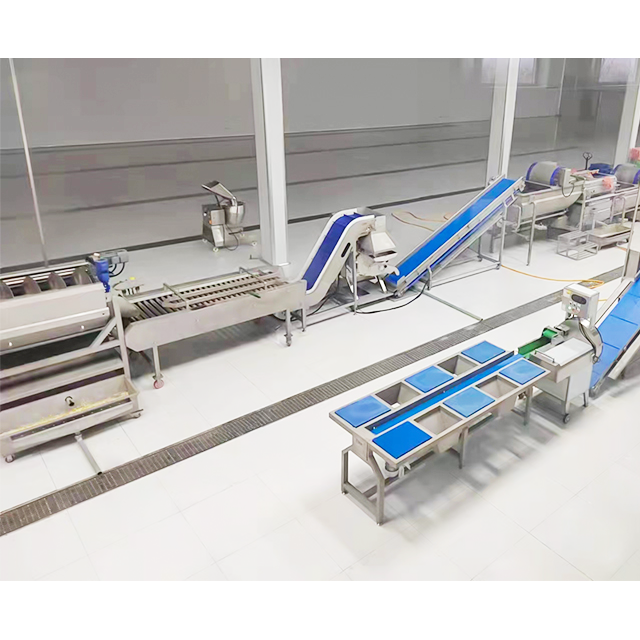 This article explores fruit and vegetable washing line design for 2026, focusing on organic produce compliance, post-wash drying, and optical sorting. It compares bubble, brush, spray, and ultrasonic washing technologies; explains air-knife and centrifugal drying; outlines four capacity tiers; and identifies five industry trends and five common purchasing errors. The guide is written for processors serving organic, fresh-cut, and export markets who need practical, mechanical equipment selection advice.Industry Insights
 -
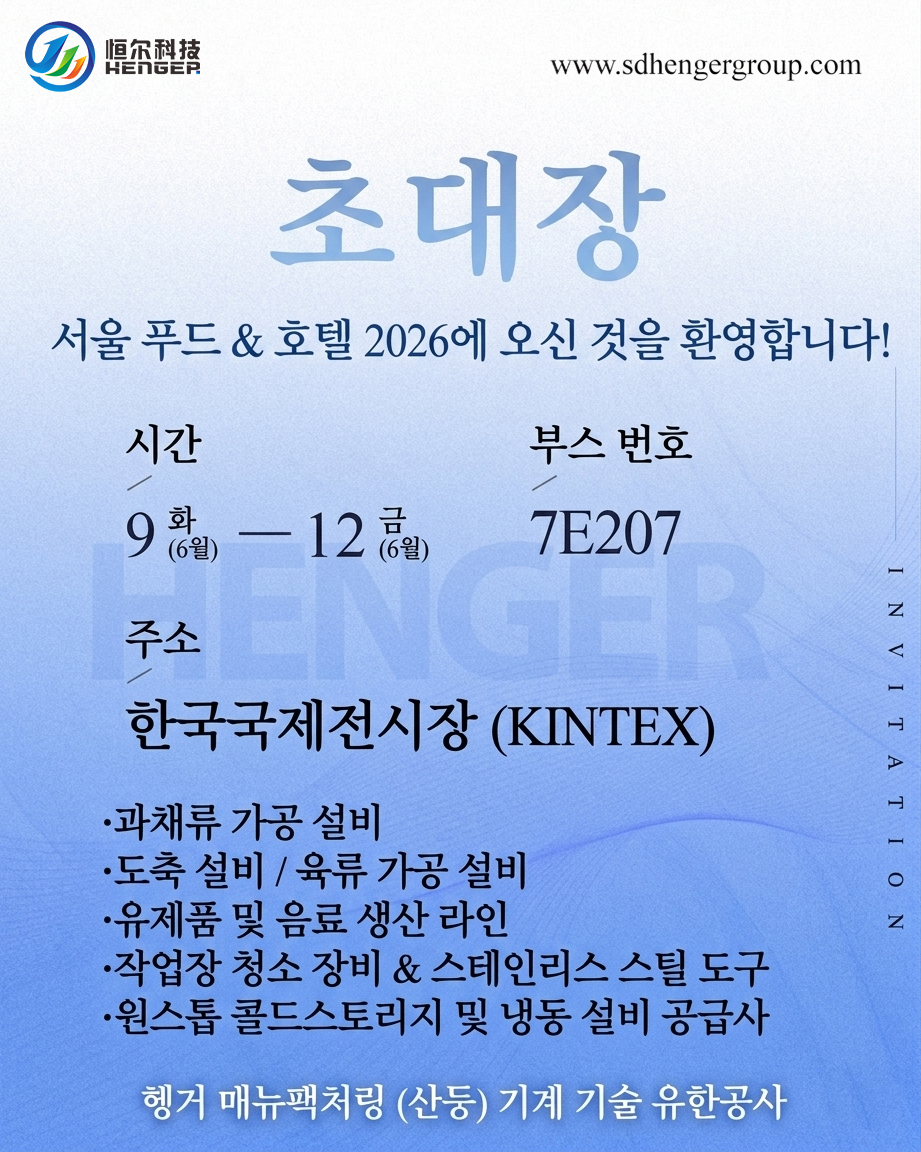 You're Invited: Meet Henger at Seoul Food & Hotel 2026!안녕하세요,We are thrilled to invite you to connect with Henger Manufacturing (Shandong) Machinery Technology Co., Ltd. at the upcoming Seoul Food & Hotel 2026, the premier food processing and hospitality industry event in South Korea! Event DatCompany Dynamic
