

Yogurt Production Line: High-Protein & Functional Processing Equipment for the GLP-1 Era — A Complete 2026 Buyer's Guide


Yogurt Production Line: High-Protein & Functional Processing Equipment for the GLP-1 Era — A Complete 2026 Buyer's Guide
The yogurt industry is navigating one of its most transformative periods in decades. Global yogurt consumption continues its robust expansion — the market is projected to grow from $33.8 billion in 2026 to $62.6 billion by 2034, advancing at an 8.00% CAGR — but what consumers want from their yogurt has changed fundamentally. High-protein Greek and skyr-style varieties now command 40% of the product mix. Functional formulations targeting gut health, immunity, and metabolic wellness are no longer niche. And a new force — GLP-1 receptor agonist medications — is reshaping product development priorities across the entire dairy sector.
For dairy processors planning a new yogurt production line or upgrading existing capacity, the equipment decisions made today will determine competitiveness for the next decade. This guide examines the key processing technologies, line design principles, and market dynamics that define modern yogurt manufacturing in 2026.
The High-Protein Revolution: Greek, Skyr & Beyond
Greek yogurt's dominance is no accident. At roughly double the protein content of conventional stirred yogurt, it aligns perfectly with the global shift toward protein-forward diets. The yogurt processing equipment required for high-protein production differs significantly from standard lines in several critical areas.
Separation and concentration. The defining step in Greek yogurt manufacturing is the removal of whey to achieve the desired protein concentration — typically 8–10% protein versus 3–4% in regular yogurt. Modern production lines employ either centrifugal separation or ultrafiltration (UF) membrane systems. UF-based concentration offers superior control over final protein content while recovering whey as a high-value co-product rather than an acidic waste stream, an increasingly important economic consideration as whey protein concentrate commands premium pricing in 2026.
Fermentation tank design for high-viscosity products. High-protein yogurt ferments display substantially higher viscosity than standard cultured milk. Fermentation tanks must be engineered with appropriate agitator configurations — typically gate-type or anchor agitators with variable-speed drives — to maintain gentle, uniform mixing without shearing the protein gel structure. Jacketed tank designs with precise temperature control (±0.5°C) are essential for consistent fermentation outcomes, particularly for products where target pH must be hit within narrow windows to achieve the desired texture profile.
Post-fermentation handling. The transition from fermentation tank to filling machine is where many high-protein yogurt lines lose product quality. Progressive cavity pumps and wide-diameter stainless steel transfer piping minimize shear damage. In-line texturizers and back-pressure valves allow processors to fine-tune mouthfeel parameters without reformulating the base recipe — a practical advantage when producing multiple SKUs from the same fermentation batch.
GLP-1 Drugs: How Weight-Management Medications Are Reshaping Yogurt Production
The rapid adoption of GLP-1 receptor agonists — medications that regulate appetite and glucose metabolism — represents one of the most significant consumer behavior shifts the food industry has encountered. With millions of patients using these drugs globally, yogurt manufacturers are adapting their product portfolios and, by extension, their processing equipment requirements.
GLP-1 users typically seek products that are high in protein, portion-controlled, and formulated with digestive comfort in mind. This is driving demand for:
- Single-serve, high-protein formats: 150–200g cups with 15–25g protein per serving, requiring precision dosing and filling equipment capable of handling thicker, protein-fortified bases without compromising fill accuracy.
- Lactose-free and A2 protein variants: These products require dedicated or thoroughly sanitized processing lines to prevent cross-contamination, plus enzyme dosing systems for lactose hydrolysis prior to fermentation.
- Smooth-texture formulations: GLP-1 users report heightened sensitivity to texture — a finding that validates investment in homogenization and texturizing equipment designed specifically for cultured dairy applications.
Equipment flexibility is the operational response to this trend. Lines designed with modular buffer tanks, interchangeable heat exchangers, and multi-recipe CIP programming allow processors to switch between standard, high-protein, lactose-free, and functional formulations without prolonged changeover downtime.
Smart Fermentation: From Manual pH Checks to Cloud-Connected Production
Fermentation is the heart of yogurt manufacturing. It is also the stage where small deviations produce large quality consequences. Traditional fermentation monitoring — manual pH sampling, operator logbooks, reactive adjustments — introduces variability that modern markets no longer tolerate.
Today's advanced yogurt production lines integrate in-line pH, temperature, and viscosity sensors that stream real-time data to centralized control systems. When fermentation curves deviate from the target profile, the system can automatically adjust jacket water temperature or initiate gentle agitation before an operator even notices the anomaly. For multi-site dairy operations, cloud-connected fermentation dashboards enable production managers to monitor batch consistency across facilities from a single interface — a capability that is moving from "nice to have" to "expected" in competitive dairy markets.
Key equipment components for smart fermentation include:
| Component | Function | 2026 Trend |
|---|---|---|
| In-line pH sensors | Continuous pH monitoring without sampling | Optical pH probes replacing glass electrodes — longer life, no drift |
| Variable-speed agitators | Gentle mixing throughout fermentation | Servo-driven with torque feedback for viscosity inference |
| Jacketed fermentation tanks | Precise temperature control via heating/cooling jacket | Dimpled jacket designs improving heat transfer efficiency by 15–20% |
| PLC/HMI control systems | Recipe management, data logging, alarm handling | Cloud connectivity with mobile alerting and remote diagnostics |
| CIP-integrated tank design | Automated cleaning without disassembly | Rotary spray balls with flow verification; chemical recovery systems |
The return on investment for smart fermentation infrastructure comes from three directions: reduced batch rejection rates, consistent product quality that protects brand equity, and labor efficiency — a meaningful consideration when skilled dairy operators are in increasingly short supply.
Clean Label Processing: Minimal Ingredients, Maximum Transparency
Clean label has transitioned from consumer preference to regulatory pressure. Across Europe and North America, ingredient list scrutiny is intensifying, and yogurt processors are responding by reformulating to eliminate stabilizers, artificial thickeners, and preservatives — or to replace them with recognizable alternatives like pectin, locust bean gum, and native starch.
For equipment selection, clean label reformulation changes the processing equation. When you remove modified starch from a stirred yogurt recipe, you lose the ingredient that provided viscosity stability through the distribution chain. That stability now has to come from the processing itself — specifically, from precisely controlled protein denaturation during pasteurization, optimized fermentation kinetics, and minimal-shear post-fermentation handling.
What this means for equipment:
- Plate heat exchangers with programmable hold times: Achieving the right degree of whey protein denaturation (typically 70–90%) without over-processing requires precise time-temperature control during milk pasteurization. Modern plate heat exchangers with variable hold tube configurations deliver this flexibility.
- High-pressure homogenizers with clean-label compatibility: Single-stage or gentle two-stage homogenization at moderate pressures (150–200 bar) improves texture stability without requiring stabilizer addition — but only when the homogenizer is correctly specified for the target fat content and protein level.
- Post-pasteurization contamination prevention: When preservatives are eliminated, microbial control depends entirely on process hygiene. Hermetically sealed processing zones, sterile air overpressure on buffer tanks, and validated CIP protocols are non-negotiable.
Plant-Based & Hybrid Lines: One Line, Multiple Product Categories
The plant-based yogurt segment — built on almond, coconut, oat, and soy bases — continues its rapid expansion. For equipment buyers, the practical question is whether to invest in a dedicated plant-based line or to specify a hybrid line capable of processing both dairy and plant-based products.
The answer depends on production volume and product portfolio strategy, but the technical feasibility of hybrid lines has improved substantially. Key considerations include:
- Allergen segregation: Dedicated or thoroughly validated CIP cycles between dairy and soy/almond runs. Separate storage for plant-base ingredients to prevent cross-contact.
- Fermentation differences: Plant-based bases ferment differently than dairy milk — different starter cultures, different pH curves, different viscosity development. The fermentation control system must accommodate multiple recipe profiles with distinct set-point trajectories.
- Homogenization requirements: Plant-based products often require more aggressive homogenization to achieve stable emulsions. A homogenizer with variable pressure control and the ability to handle both dairy and non-dairy viscosities is essential for hybrid operation.
For processors serving markets where both dairy and plant-based yogurt demand is growing, a well-designed hybrid line can avoid the capital expense of two separate facilities while capturing revenue from both categories.
Energy Efficiency & Sustainability: The Refrigeration and CIP Equation
Yogurt production is energy-intensive. Milk reception and storage require chilling. Pasteurization consumes thermal energy. Fermentation demands precise temperature maintenance. Cold storage for finished products runs continuously. Among these, two areas offer the most significant efficiency gains.
Refrigeration optimization. The cold chain from raw milk intake through finished product storage can account for 30–40% of a yogurt plant's total electricity consumption. Modern ammonia-based or CO₂ refrigeration systems with variable-speed compressors, floating head pressure control, and heat recovery integration can reduce refrigeration energy use by 25–35% compared to legacy HFC systems. Heat recovered from refrigeration can preheat CIP water or contribute to space heating, further improving overall plant energy balance.
CIP system efficiency. Cleaning-in-place is essential for food safety but is also a major consumer of water, chemicals, and thermal energy. Modern CIP systems with conductivity-based chemical dosing, turbidity-triggered rinse termination, and recovery of final rinse water for pre-rinse of the next cycle can reduce water consumption by 30% and chemical usage by 25% compared to time-based CIP programming. Multi-tank CIP systems that allow simultaneous cleaning of different line sections further reduce downtime.
Capacity Planning: Matching Equipment to Market Ambition
| Production Scale | Daily Output | Equipment Configuration | Typical Market Fit |
|---|---|---|---|
| Small / Artisanal | 500–2,000 L/day | Batch pasteurizer, 2–3 fermentation tanks (500–1,000L), manual/semi-auto filling, basic cold storage | Specialty retail, farmers markets, local distribution |
| Medium / Regional | 5,000–20,000 L/day | Plate heat exchanger, 5–8 fermentation tanks (2,000–5,000L), inline homogenizer, automated cup filling line, walk-in cold rooms | Regional supermarket chains, food service, private label |
| Large / Industrial | 30,000–100,000+ L/day | Multiple PHE units, 12–20+ fermentation tanks (10,000–20,000L), UF concentration system, high-speed multi-lane filling, automated cold storage warehouse | National brands, export markets, co-packing |
| Hybrid / Flexible | 3,000–15,000 L/day | Multi-recipe PHE, interchangeable fermentation tanks, dual homogenizer settings, filling machine with quick-change format parts, allergen-segregated zones | Dairy + plant-based portfolio, contract manufacturing |
Selection of capacity should account not only for current demand but for product mix evolution. A line sized for 10,000 L/day of stirred yogurt may struggle to deliver 5,000 L/day of Greek yogurt due to the additional concentration step and longer fermentation cycles. Building in 20–30% headroom above today's peak demand is standard practice for lines expected to serve a 10–15 year equipment lifecycle.
2026 Key Trends Shaping Yogurt Equipment Investment
- GLP-1 market adaptation. The single most disruptive force in dairy product development. Equipment buyers should prioritize line flexibility and small-format filling capability to capture this rapidly evolving consumer segment.
- Protein fortification beyond Greek. Ambient protein shakes, protein-fortified drinkable yogurts, and high-protein dessert-style products are expanding the processing requirements beyond traditional cup-set and stirred formats.
- Texture as a premium differentiator. As Dairy Reporter noted in June 2026, texture is becoming a primary driver of premium positioning in dairy. Processing equipment that delivers consistent, differentiated mouthfeel — through controlled homogenization, optimized fermentation, and gentle handling — commands measurable price premiums.
- Sustainable packaging integration. Mono-material cups, recycled-content containers, and lightweight formats require filling and sealing equipment capable of handling new materials without compromising seal integrity or line speed.
- Water and energy benchmarking. Retailers and food service operators are increasingly requesting environmental performance data from suppliers. Yogurt plants with documented water and energy efficiency metrics gain competitive advantage in supply chain qualification.
Common Design Mistakes When Planning a Yogurt Production Line
1. Underestimating CIP infrastructure. A yogurt line is only as productive as its cleaning system. Undersized CIP — in terms of tank capacity, pump flow, or chemical dosing precision — creates bottlenecks where production capacity is lost to extended cleaning cycles.
2. Ignoring future product diversity. Specifying a line optimized exclusively for standard stirred yogurt locks the operation out of higher-margin segments — Greek, skyr, drinkable, plant-based — without costly retrofitting. Modular tank configurations and multi-recipe control systems cost marginally more at installation but pay back through market agility.
3. Inadequate cold storage sizing. Yogurt requires continuous cold storage from filling through distribution. Under-sizing cold rooms relative to production capacity creates a recurring bottleneck that no amount of processing optimization can resolve.
4. Overlooking utility requirements. Steam, compressed air, chilled water, and electrical supply must be specified for peak simultaneous demand, not average consumption. A fermentation room with 12 tanks all calling for cooling simultaneously imposes a refrigeration load that may be 3–4 times the average.
Why an Integrated Equipment Supplier Matters
Yogurt production spans multiple process stages — milk reception, standardization, pasteurization, homogenization, fermentation, cooling, filling, and cold storage — each with interdependent equipment specifications. When components are sourced from separate vendors, the processor bears the burden of making them work together, troubleshooting interface issues, and managing multiple warranty and service relationships.
An integrated equipment supplier delivers a yogurt production line where all components are specified as a unified system. Pasteurizer capacity is matched to fermentation tank volume. CIP circuits are designed for the actual pipe runs and tank geometries. Control systems communicate seamlessly across process stages. When a processing issue arises, a single point of contact diagnoses and resolves it.
For dairy processors — whether entering the yogurt category for the first time or expanding established production — the equipment partner you choose shapes your competitive position for years to come. We invite you to discuss your yogurt production requirements with our engineering team. Contact Henger Manufacturing today to explore how a purpose-built yogurt processing line can position your operation for the opportunities ahead.
Ready to Plan Your Yogurt Production Line?
Contact the Henger Manufacturing engineering team to discuss your yogurt processing requirements — from high-protein Greek yogurt to functional probiotic formulations, plant-based alternatives, and hybrid production strategies. We deliver integrated processing lines engineered for the realities of 2026's dairy market.
Visit www.sdhengergroup.com to learn more.
Related News
-
-
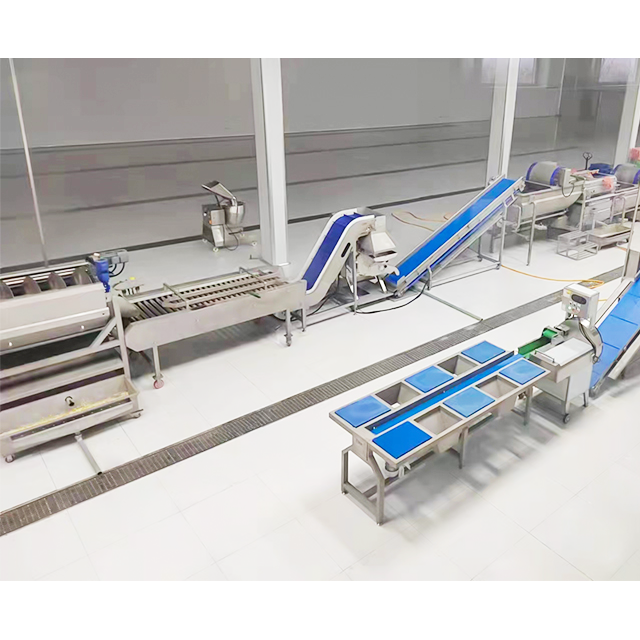 This article explores fruit and vegetable washing line design for 2026, focusing on organic produce compliance, post-wash drying, and optical sorting. It compares bubble, brush, spray, and ultrasonic washing technologies; explains air-knife and centrifugal drying; outlines four capacity tiers; and identifies five industry trends and five common purchasing errors. The guide is written for processors serving organic, fresh-cut, and export markets who need practical, mechanical equipment selection advice.Industry Insights
 -
 You're Invited: Meet Henger at Seoul Food & Hotel 2026!안녕하세요,We are thrilled to invite you to connect with Henger Manufacturing (Shandong) Machinery Technology Co., Ltd. at the upcoming Seoul Food & Hotel 2026, the premier food processing and hospitality industry event in South Korea! Event DatCompany Dynamic
