Food Processing Cleaning Equipment: The Complete Guide To Hygiene Compliance with CE/ISO Certified Solutions in 2026


Food Processing Cleaning Equipment: The Complete Guide to Hygiene Compliance with CE/ISO Certified Solutions in 2026
In food processing, cleaning equipment is not optional — it is the baseline. Every production line, from slaughterhouses to dairy plants, depends on systematic hygiene infrastructure that prevents contamination before it starts. Without it, regulatory compliance collapses, product recalls multiply, and export doors close.
This guide covers the full range of cleaning equipment that food processing facilities need in 2026: personnel hygiene stations, CIP (Cleaning-in-Place) systems, foam cleaning units, and environmental sanitation tools. It also explains why CE and ISO certification — both of which we hold — matters when sourcing from international equipment manufacturers.
Why Cleaning Equipment Is the Foundation of Food Safety
Foodborne illness costs the global economy an estimated $110 billion annually in lost productivity and medical expenses, according to the World Bank. Regulatory bodies have responded with tougher enforcement: the FDA's FSMA Preventive Controls rule now mandates documented sanitation procedures, while the EU's Regulation (EC) No. 852/2004 requires all food business operators to implement HACCP-based hygiene systems.
The market reflects this urgency. The Cleaning-in-Place (CIP) equipment market for food safety is growing at a CAGR of 5.4% from 2026 to 2033. The broader industrial cleaning equipment sector — valued at over $10 billion — is expanding as processors upgrade from manual cleaning to automated, verifiable systems.
But equipment is only one side of the equation. The other is design. The USDA updated its Guidelines for the Sanitary Design and Fabrication of Meat and Poultry Processing Equipment in March 2026, reinforcing principles that affect every equipment purchaser: surfaces must be non-absorbent, corners radiused rather than sharp, and welds ground smooth to eliminate bacterial harborage points.
The Four Pillars of a Food Plant Hygiene System
A complete food processing hygiene system rests on four interconnected categories of equipment. Missing any one of them creates a contamination risk that audits will catch.
1. Personnel Hygiene Stations
People are the number one vector for contamination in food plants. Personnel hygiene stations — positioned at every entrance to production zones — form the first line of defense.
Core components include:
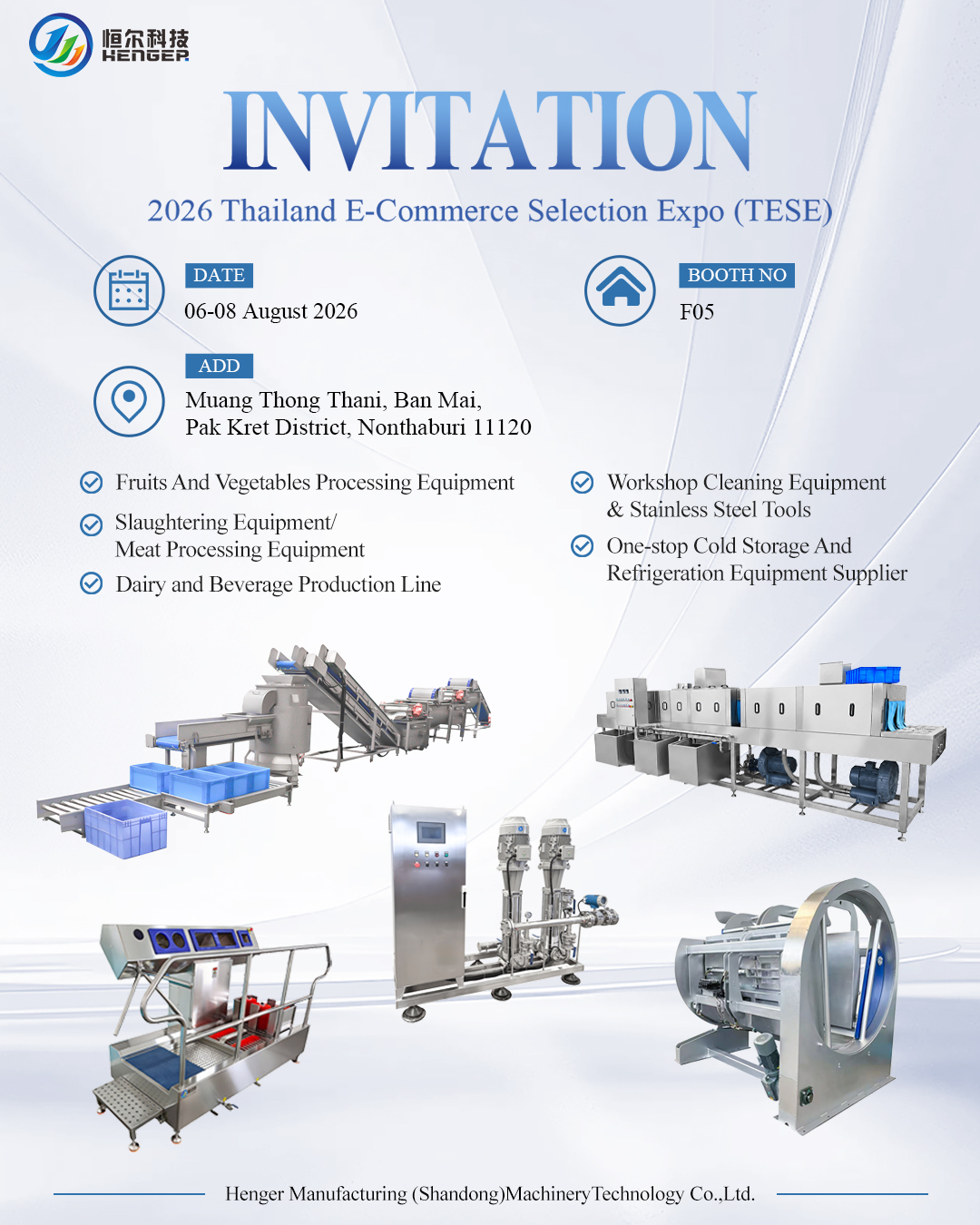
- Automatic boot washers and sole cleaning stations. These units use rotating brushes and water jets to remove dirt and debris from footwear soles. Modern models feature stainless steel construction, automatic chemical dosing, and pass-through designs that process multiple workers per minute. For high-care zones, models with integrated drying reduce slip hazards.
- Hand washing and sanitizing stations. Sensor-activated, touch-free stations dispense soap, water, and sanitizer in sequence. Look for units with data logging capability — increasingly required for audit documentation.
- Air showers and access turnstiles. Interlocked air shower systems blow high-velocity HEPA-filtered air across personnel to dislodge particulates before entry. Combined with turnstile access control, they enforce the hygiene protocol: no sanitation step completed, no entry.
- Clothing management. Stainless steel lockers, changing benches, and boot rack drying systems complete the hygiene entrance. Boot dryers with heated airflow prevent fungal growth between shifts.
2. Cleaning-in-Place (CIP) Systems
CIP systems clean the interior surfaces of pipes, tanks, heat exchangers, and filling machines without disassembly — a critical capability for dairy, beverage, and liquid food processors where manual cleaning of closed systems is impractical.
A standard CIP cycle follows five stages:
- Pre-rinse: Water flush to remove loose product residues
- Caustic wash: Alkaline detergent circulation (typically 0.5–2% NaOH at 70–85°C)
- Intermediate rinse: Water flush to remove detergent
- Acid wash: Acidic solution to remove mineral scale and neutralize residues
- Final rinse: Potable water flush until conductivity meets specification
Modern CIP systems range from single-tank units suitable for small dairy processors to multi-tank, multi-circuit systems that clean several production lines simultaneously. Key selection factors include tank capacity (typically 500L to 10,000L+), number of CIP circuits, chemical recovery capability (which reduces both water and chemical consumption by 20–40%), and automation level — from semi-automatic push-button operation to fully programmable PLC-controlled sequences with batch recording.
3. Foam and Centralized Cleaning Systems
While CIP handles closed systems, open surfaces — floors, walls, equipment exteriors, conveyors — require a different approach. Centralized foam cleaning systems distribute water and detergent from a central station to multiple satellite points throughout the plant.
These systems typically include:
- Central pump station: Houses high-pressure pumps (30–60 bar), detergent and disinfectant dosing units, and control panel
- Satellite stations: Wall-mounted units with hose reels, foam lances, and rinse guns positioned at cleaning points
- Chemical management: Automatic concentration control ensures consistent detergent-to-water ratios — eliminating the variability of manual mixing
Foam cleaning is the dominant method for open-surface sanitation in meat and poultry plants. The foam clings to vertical surfaces, extending contact time and improving microbial kill rates. Medium-pressure rinse (15–25 bar) follows to remove foam without aerosolizing contaminants — a critical consideration since high-pressure spray can disperse bacteria into the air.
4. Environmental Sanitation Equipment
Beyond direct product-contact surfaces, the processing environment itself requires active sanitation:
- Air purification and disinfection units: UV-C air sterilizers and HEPA filtration systems reduce airborne microbial load in high-care zones. Ozone generators provide periodic deep sanitation during non-production hours.
- Drain and floor cleaning systems: Dedicated floor scrubbers with vacuum recovery prevent cross-contamination from floor-level biofilms.
- Waste handling and container washing: Automated bin and tote washers — essentially CIP for transport containers — prevent the spread of contamination between production zones.
CE/ISO Certification: What It Means for International Buyers
For food processing companies sourcing equipment from international suppliers, certification is not a "nice to have" — it is a procurement requirement. Two certifications carry the most weight:
| Certification | What It Covers | Why It Matters |
|---|---|---|
| CE Marking | Compliance with EU health, safety, and environmental requirements under applicable directives (Machinery Directive 2006/42/EC, EMC Directive, Low Voltage Directive) | Mandatory for equipment placed on the EU/EEA market. Signals that the manufacturer has conducted conformity assessment, compiled technical documentation, and meets essential safety requirements. |
| ISO 9001 | Quality management system covering design, manufacturing, installation, and after-sales service | Demonstrates consistent quality control across production batches. Required by many international tenders and procurement frameworks. |
Our cleaning equipment carries both CE certification and ISO 9001 quality management certification. For importers in Europe, the Middle East, Africa, and Southeast Asia, this eliminates the compliance risk that comes with uncertified suppliers — a risk that Customs authorities take seriously.
Regulatory Landscape in 2026
Food safety regulations are becoming more prescriptive about cleaning equipment, not less. Key developments in 2026 include:
- USDA Sanitary Design Guidelines (updated March 2026): The latest revision expands coverage to auxiliary equipment — including boot washers, hand wash stations, and tool sanitizers — requiring that these items meet the same sanitary design principles as direct food-contact equipment.
- EU Food Regulation Updates (May 2026): New restrictions on chemical residues from cleaning agents require processors to validate that rinse cycles achieve specified residue limits. This drives demand for CIP systems with automated conductivity-based rinse verification.
- FDA FSMA Preventive Controls: Enforcement has intensified in 2026, with sanitation controls one of the most-cited areas in FDA warning letters. Documented cleaning schedules, verified by ATP swab testing, are now the minimum expectation.
Equipment Selection: Matching Cleaning Solutions to Your Facility
Different food processing environments demand different hygiene configurations. Here is a practical framework:
| Processing Environment | Hygiene Level | Recommended Equipment Configuration |
|---|---|---|
| Raw meat / poultry receiving and slaughter | Standard hygiene | Boot washers + hand sanitizing stations at zone entry; centralized foam cleaning; periodic ozone sanitation |
| Meat cutting and further processing | High hygiene | Automatic sole cleaning + hand wash + air shower at entrance; foam cleaning with acid rinse; HEPA air units; tool sterilizers |
| Dairy and beverage processing | High hygiene + CIP | Complete hygiene entrance (boot washer + hand station + air shower); multi-tank CIP system with chemical recovery; environmental UV-C |
| Ready-to-eat / high-care zones | Ultra-high hygiene | Full gowning room + interlocked hygiene entrance; dedicated CIP for each line; positive-pressure HEPA; continuous air monitoring |
For most mid-scale processors, a phased approach works best: implement personnel hygiene stations and centralized foam cleaning first (the highest ROI in terms of audit compliance), then add CIP systems as production scales.
2026 Trends Shaping Food Plant Hygiene
- Water and chemical reduction. CIP systems with chemical recovery circuits can reduce water consumption by 30% and chemical usage by 25% per cleaning cycle. In regions with high water costs or strict effluent regulations, this pays back quickly. Foam cleaning with automatic dilution control eliminates over-concentration — the most common source of chemical waste.
- Verifiable cleaning. ATP (adenosine triphosphate) swab testing — which measures organic residue within seconds — is replacing visual inspection as the standard for "clean." Equipment manufacturers are responding with CIP controllers that log every cycle parameter (temperature, conductivity, flow rate, chemical concentration) and export to plant QA systems.
- Stainless steel durability. The shift from painted carbon steel to 304 and 316L stainless steel continues for hygiene equipment exposed to aggressive cleaning chemicals. 316L stainless — with its molybdenum content — resists pitting corrosion from chlorinated detergents, extending service life in harsh washdown environments.
- Modular hygiene entrances. Pre-engineered hygiene entrance modules — combining boot washing, hand sanitizing, and turnstile access in a single integrated unit — reduce on-site installation time from weeks to days. This matters for greenfield projects and plant expansions where speed to operation is critical.
- Sustainability documentation. Large food brands increasingly require equipment suppliers to disclose water and energy consumption data for sustainability reporting. Cleaning equipment with built-in water metering and energy monitoring supports this requirement directly.
Key Selection Criteria for Procurement Teams
When evaluating cleaning equipment suppliers, prioritize these factors:
- Material quality: All product-contact and splash-zone surfaces must be 304 or 316L stainless steel. Look for continuous (not spot) welding and polished finish — Ra ≤ 0.8 μm for high-care zones.
- Certification documentation: CE Declaration of Conformity and ISO certificate must be current, model-specific, and issued by an accredited notified body — not self-declared.
- Water and chemical efficiency data: Ask for water consumption per cleaning cycle and chemical dosing rates. Compare across suppliers using standardized throughput assumptions.
- After-sales support: Cleaning equipment operates in harsh conditions. Spare parts availability, remote troubleshooting capability, and local service partners matter as much as the initial purchase.
- Integration capability: Can the CIP controller export data to your plant's SCADA or MES system? Can hygiene entrance turnstiles integrate with your access control system? These integration questions determine whether equipment becomes part of your operation or a standalone island.
Why Partner with an Integrated Cleaning Equipment Supplier
Many food processors piece together hygiene equipment from multiple vendors — boot washers from one supplier, CIP systems from another, foam cleaning from a third. The result is a patchwork: different control interfaces, inconsistent documentation, and no single point of accountability when something fails an audit.
An integrated supplier that manufactures the full range — from personnel hygiene stations to CIP systems to environmental sanitation — provides three advantages:
- Unified technical support. One team understands your entire hygiene infrastructure.
- Consistent build quality. The same stainless steel fabrication standards apply across all equipment categories.
- Simplified compliance. One set of CE/ISO certification documents covers your entire cleaning equipment package.
At SD Henger Group, our cleaning equipment division delivers precisely this: a complete, CE/ISO certified range designed for the demanding environments of meat, dairy, and beverage processing. From single boot washer units to turnkey plant-wide hygiene systems, every piece is built to the same sanitary standard and backed by the same certification.
Q: What is the difference between CIP and COP cleaning?
CIP (Cleaning-in-Place) cleans equipment internals — pipes, tanks, heat exchangers — without disassembly. COP (Clean-out-of-Place) involves removing parts and cleaning them in a dedicated wash tank. Most food plants use both: CIP for closed systems, COP for removable components like valve bodies and filling nozzles.
Q: How do I know if my cleaning equipment meets EU import requirements?
Verify that the supplier provides a valid CE Declaration of Conformity issued by an EU-recognized notified body. The declaration must reference the specific equipment models and applicable directives. Self-declared CE marking without third-party verification does not satisfy many EU customs authorities.
Q: How often should CIP system chemicals be changed?
With chemical recovery systems, caustic detergent can be reused for multiple cycles — typically 8–24 hours of operation before dumping. Conductivity sensors monitor detergent strength and trigger replenishment dosing automatically. Without recovery, single-use chemical consumption is 3–5× higher.
Q: Can one hygiene entrance serve multiple production zones?
Not ideally. Each production zone with different hygiene requirements (standard vs. high-care vs. ultra-high) should have its own dedicated hygiene entrance to prevent cross-contamination and enforce zone-specific protocols.
Looking for CE/ISO Certified Cleaning Equipment for Your Food Processing Facility?
SD Henger Group supplies a complete range of food-grade cleaning equipment — personnel hygiene stations, automated CIP systems, centralized foam cleaning, and environmental sanitation units — all backed by CE and ISO 9001 certification. With installations across 100+ countries, we understand what international food safety auditors expect.
Contact our team today to discuss your facility's hygiene requirements and receive a tailored equipment proposal.
Visit our website or reach out through our contact page — we respond within one business day.