

Fruit & Vegetable Washing Line: Water-Smart Technology, Food Safety Compliance & Equipment Selection for 2026 Processors


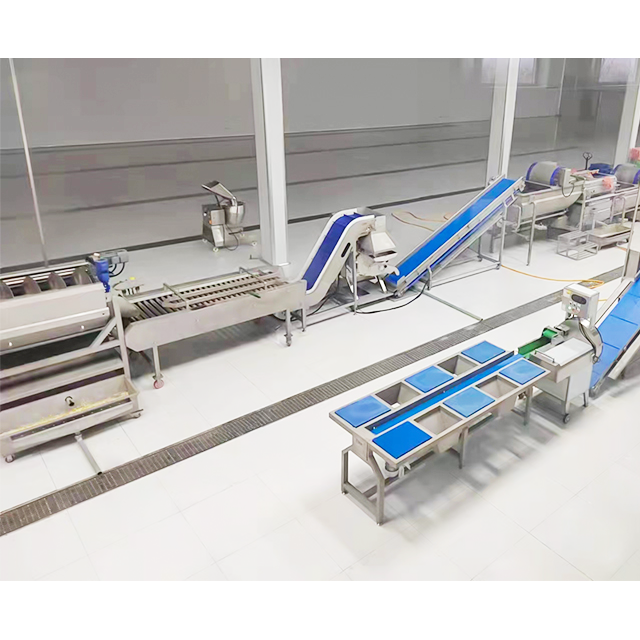
Fruit & Vegetable Washing Line: Water-Smart Technology, Food Safety Compliance & Equipment Selection for 2026 Processors
The global fruit and vegetable processing equipment market is projected to reach $11.8 billion by 2031, growing at a steady 6.24% CAGR from $8.72 billion in 2026. Within this landscape, washing equipment stands out as the fastest-growing segment — expected to expand at 8% CAGR through 2035, nearly doubling from $1.6 billion to $3.4 billion. Why? Because the wash line is where food safety is won or lost. There is no second chance further downstream.
For processors handling leafy greens, root vegetables, berries, citrus, or fresh-cut produce, the washing line is the single most critical piece of equipment in the entire facility. A poorly designed washing system doesn't just risk contamination — it wastes water, damages delicate product, consumes excessive labor, and undermines shelf life. This guide examines the technologies, compliance requirements, and selection criteria that matter most in 2026.
The Four Pillars of Modern Produce Washing Technology
Not all washing is created equal. Different produce types demand fundamentally different mechanical approaches. Understanding the four core technologies — and when to deploy each — is the foundation of any well-designed washing line.
1. Bubble Washing (Air-Injection Systems)
Bubble washing uses compressed air injected through perforated pipes at the tank bottom, creating millions of micro-bubbles that generate turbulent water movement. This rolling, tumbling action gently scrubs produce surfaces without mechanical abrasion. It's the workhorse for leafy greens (spinach, lettuce, herbs), delicate fruits (berries, cherries), and irregularly shaped vegetables (broccoli, cauliflower).
Key advantage: The air-injection turbulence reaches crevices and folds that spray nozzles miss, while the rolling motion prevents product from settling and bruising. Modern systems can remove up to 92% of surface pesticide residues when combined with appropriate wash additives. The downside: bubble systems consume more water than spray alternatives and require careful management of dissolved solids buildup in recirculating configurations.
2. Spray Washing (High-Pressure Shower Systems)
Spray washing uses a series of strategically positioned nozzles above and below a conveyor belt to blast product surfaces with pressurized water. This technology excels with firm-skinned produce — tomatoes, apples, citrus, cucumbers, potatoes, and root vegetables. Multi-stage spray tunnels can incorporate pre-wash (soil removal), main wash (sanitizer contact), and final rinse zones in a single compact footprint.
Key advantage: Water efficiency. Spray systems typically consume 30-40% less water than immersion-based methods because water is applied precisely where needed. Adjustable nozzle angles and variable-pressure pumps allow processors to dial in the exact washing intensity for each product type. The limitation: spray washing struggles with leafy products, where overlapping leaves shield interior surfaces from direct spray contact.
3. Ultrasonic Cleaning Systems
Ultrasonic washing generates high-frequency sound waves (typically 20-40 kHz) that create microscopic cavitation bubbles in the wash water. When these bubbles implode, they release intense localized energy — effectively scrubbing produce surfaces at the microscopic level. This technology is particularly effective for removing biofilm, wax coatings, and pesticide residues that survive conventional washing.
Key advantage: Unmatched penetration into surface microstructures. Ultrasonic systems can remove up to 95% of microbial contamination when combined with appropriate sanitizers. They're increasingly adopted for high-value products — organic produce, ready-to-eat salad components, and export-grade fruits where visual quality and microbiological safety standards are stringent. The trade-off: higher equipment cost and energy consumption per ton processed.
4. Ozone-Enhanced Washing
Ozone (O₃) dissolved into wash water provides powerful antimicrobial action without leaving chemical residues — it decomposes back into oxygen within minutes. Ozone systems are gaining traction as processors seek alternatives to chlorine-based sanitizers amid growing consumer and regulatory pressure for "clean label" processing methods.
Key advantage: Ozone is 50% more effective than chlorine at equivalent concentrations against common pathogens including E. coli, Salmonella, and Listeria. It also oxidizes ethylene gas, extending produce shelf life by 2-4 days in many cases. The implementation challenge: ozone generation and injection equipment adds approximately 15-20% to system cost, and proper ventilation is required to protect worker safety.
| Produce Type | Recommended Tech | Water Use | Microbial Reduction | Product Damage Risk |
|---|---|---|---|---|
| Leafy greens | Bubble + Ozone | High | 93-97% | Very Low |
| Root vegetables | Spray + Brush | Moderate | 88-93% | Low |
| Berries/soft fruit | Bubble + Ultrasonic | Moderate | 94-98% | Very Low |
| Citrus/firm fruit | Spray + Ozone | Low | 90-95% | Low |
| Fresh-cut produce | Ultrasonic + Ozone | Moderate | 95-99% | Low-Medium |
| Potatoes/tubers | Spray + Drum | Low-Moderate | 85-90% | Medium |
Water Management: The 2026 Sustainability Imperative
Water is no longer just an operational cost — it's a strategic resource subject to tightening regulations, rising municipal tariffs, and increasing scrutiny from retail buyers demanding sustainability credentials from their supply chains. A modern washing line without integrated water recycling is already obsolete.
The numbers make the case clearly: a medium-scale vegetable washing line (5 tons/hour) without water recycling can consume 15,000-25,000 liters per hour. That's 120,000-200,000 liters per 8-hour shift. In regions facing seasonal water stress — which increasingly includes parts of Southern Europe, the Middle East, India, and the American Southwest — this level of consumption is operationally unsustainable.
Three Levels of Water Recovery
Level 1 — Sedimentation & Filtration: The baseline approach. Wash water passes through settling tanks to remove soil and debris, then through multi-stage filters (typically 200μm → 50μm → 20μm). Recovers 60-70% of water for reuse in initial wash stages. Suitable for root vegetables with heavy soil loads. Payback period: 8-14 months at typical municipal water rates.
Level 2 — Dissolved Air Flotation (DAF) + UV: Adds DAF for fine suspended solids removal followed by UV disinfection. Recovers 80-85% of water suitable for all wash stages except final rinse. This is the current industry standard for processors exporting to EU markets, where water reuse in food contact applications requires validated pathogen reduction. Payback period: 14-20 months.
Level 3 — Membrane Bioreactor (MBR) + Reverse Osmosis: The most advanced configuration. MBR removes dissolved organics and microorganisms; RO polishes water to near-potable quality. Recovers 90-95% of water, with the concentrate stream minimized. Suitable for large-scale facilities processing 10+ tons/hour. Payback period: 18-30 months, but often accelerated by regulatory compliance benefits and reduced wastewater discharge fees.
Food Safety Compliance: HACCP on the Wash Line
The wash line presents multiple Critical Control Points (CCPs) in any HACCP plan. Processors must validate and monitor several parameters continuously:
- Wash water temperature: Must remain below 5°C for fresh-cut produce to inhibit pathogen growth; warmer water can actually drive bacteria deeper into produce tissue through capillary action.
- Sanitizer concentration: Free chlorine (50-200 ppm for produce washing), peroxyacetic acid (40-80 ppm), or dissolved ozone (1-3 ppm) must be maintained within validated ranges with automated dosing and continuous monitoring.
- Water change frequency: Organic load buildup reduces sanitizer efficacy. Turbidity sensors and oxidation-reduction potential (ORP) probes provide real-time data to trigger water replenishment.
- Equipment sanitation: Wash tanks, conveyors, and spray manifolds must be accessible for daily cleaning. CIP (Clean-in-Place) integration is increasingly standard on new installations — 85% of equipment sold in 2025-2026 includes embedded CIP capability.
The EU's updated General Food Law enforcement guidance (effective January 2026) places specific emphasis on validated washing processes for fresh produce, reflecting the growing regulatory focus on this processing stage. For processors exporting to multiple markets, designing the washing line to meet the most stringent applicable standard — typically EU or FSMA — provides the widest market access.
Capacity Planning: Matching the Line to Your Operation
Washing line capacity must align with both current throughput and realistic growth projections. Over-specifying wastes capital; under-specifying creates bottlenecks that ripple through the entire processing chain.
| Scale | Throughput | Line Configuration | Typical Footprint | Target Processor |
|---|---|---|---|---|
| Small | 500-1,500 kg/h | Single-tank bubble + spray rinse | 15-25 m² | Farm-level packhouses, small processors |
| Medium | 1,500-5,000 kg/h | Multi-stage (pre-wash → bubble → spray → final rinse) | 40-80 m² | Regional processors, fresh-cut operations |
| Large | 5,000-15,000 kg/h | Multi-lane with automated sorting, water recycling, CIP | 120-250 m² | Industrial processors, export packhouses |
| Enterprise | 15,000+ kg/h | Fully integrated processing line with real-time monitoring | 300+ m² | Multi-national processors, co-packing facilities |
2026 Market Trends Reshaping Washing Line Design
1. The Fresh-Cut Boom Demands Higher Standards
The fresh-cut produce segment is expanding at over 7% annually, driven by convenience-oriented consumers and foodservice operators seeking labor savings. Fresh-cut products have enormous surface area and no kill step before consumption — making the washing line the primary food safety barrier. This is driving adoption of multi-barrier washing approaches: ultrasonic pre-treatment → ozone wash → peroxyacetic acid final rinse, with continuous water quality monitoring at each stage.
2. Water Circularity Becomes a License to Operate
In regions from California to Catalonia, water-intensive food processing is facing permitting challenges. Processors who can demonstrate 80%+ water recovery are securing operating licenses where competitors cannot. Water recycling is shifting from "nice to have" to "must have" in new facility designs, with 49% of systems installed in 2025-2026 incorporating some form of water recovery.
3. Organic Certification Drives Equipment Specification
The organic produce market continues its 9%+ CAGR trajectory. Organic processors face unique washing challenges: no synthetic sanitizers, strict residue testing, and full traceability requirements. This drives demand for ozone-based systems, electrolyzed water technology, and equipment that can be validated for organic processing line separation.
4. Automation to Address Labor Shortages
With agricultural labor shortages persisting across North America, Europe, and parts of Asia, processors are investing in automated washing lines that reduce manual handling. Automated sorting gates, vision-based quality grading, and robotic palletizing integrated with the washing line can reduce labor requirements by 40-60% compared to manual operations. The Asia-Pacific region, which holds 31% of the global fruit and vegetable processing equipment market, is the fastest adopter of semi-automated washing solutions.
5. Data Integration and Traceability
Retail buyers and food safety auditors increasingly expect digital records of washing parameters. Modern lines incorporate IoT sensors that log water temperature, sanitizer concentration, turbidity, and throughput data — creating an auditable digital trail from receiving to dispatch. This capability is becoming a differentiator in tender processes for major retail supply contracts.
Common Design Mistakes When Specifying a Washing Line
After years of working with processors across multiple markets, several recurring mistakes stand out:
- Treating all produce the same. A line optimized for potatoes will destroy leafy greens. Multi-product facilities need either multiple dedicated lines or a modular system with quick-change washing modules.
- Ignoring water chemistry. Hard water reduces sanitizer efficacy, mineral content affects produce appearance, and pH swings can compromise ozone effectiveness. Water testing should inform system design before equipment is ordered.
- Underestimating wastewater handling. The washing line's output isn't just clean produce — it's also high-BOD wastewater. Municipal discharge limits, pretreatment requirements, and disposal costs must factor into total cost of ownership calculations.
- Skipping the pre-wash stage. Sending heavily soiled product directly into the main wash tank rapidly degrades water quality and sanitizer effectiveness. A dedicated pre-wash stage — even a simple spray bar — extends main wash water life by 3-5x.
- Designing for today's capacity only. Retrofitting a washing line for higher throughput is disruptive and expensive. Leaving 20-30% capacity headroom in the initial specification is far cheaper than replacing equipment within 3-5 years.
Selecting the Right Supplier: What to Look For
A washing line is a long-term investment — typically 10-15 years of operational life. The supplier relationship matters as much as the equipment specification. Key evaluation criteria include:
- Industry-specific experience: Can the supplier provide references from facilities processing similar produce types at comparable scale?
- Water management expertise: Does the supplier offer integrated water recycling design, not just washing hardware?
- Food safety credentials: Can they provide documentation supporting HACCP validation — material certifications, cleanability test data, hygienic design compliance?
- After-sales support: What is the spare parts availability, remote diagnostics capability, and technician response time for your region?
- Integration capability: Can the supplier deliver a complete line — washing, drying, sorting, and packaging integration — rather than requiring you to coordinate multiple vendors?
Working with an integrated equipment supplier who can deliver the full washing line — from receiving hopper through final rinse and drying tunnel — eliminates the finger-pointing that inevitably occurs when multiple vendors' equipment interfaces fail to perform as expected.
Design Your Fruit & Vegetable Washing Line for 2026 and Beyond
At Henger Manufacturing, we engineer complete fruit and vegetable washing lines tailored to your specific produce types, throughput requirements, and food safety standards. From bubble washers and spray tunnels to ultrasonic systems with integrated water recycling, our equipment is built for the compliance, sustainability, and efficiency demands of modern produce processing.
Contact our engineering team today to discuss your washing line requirements. We'll help you specify the right technology mix, capacity configuration, and water management strategy — whether you're upgrading an existing line or building a new facility from the ground up.
www.sdhengergroup.com | Request a consultation
Related News
-
-
 This article explores fruit and vegetable washing line design for 2026, focusing on organic produce compliance, post-wash drying, and optical sorting. It compares bubble, brush, spray, and ultrasonic washing technologies; explains air-knife and centrifugal drying; outlines four capacity tiers; and identifies five industry trends and five common purchasing errors. The guide is written for processors serving organic, fresh-cut, and export markets who need practical, mechanical equipment selection advice.Industry Insights
 -
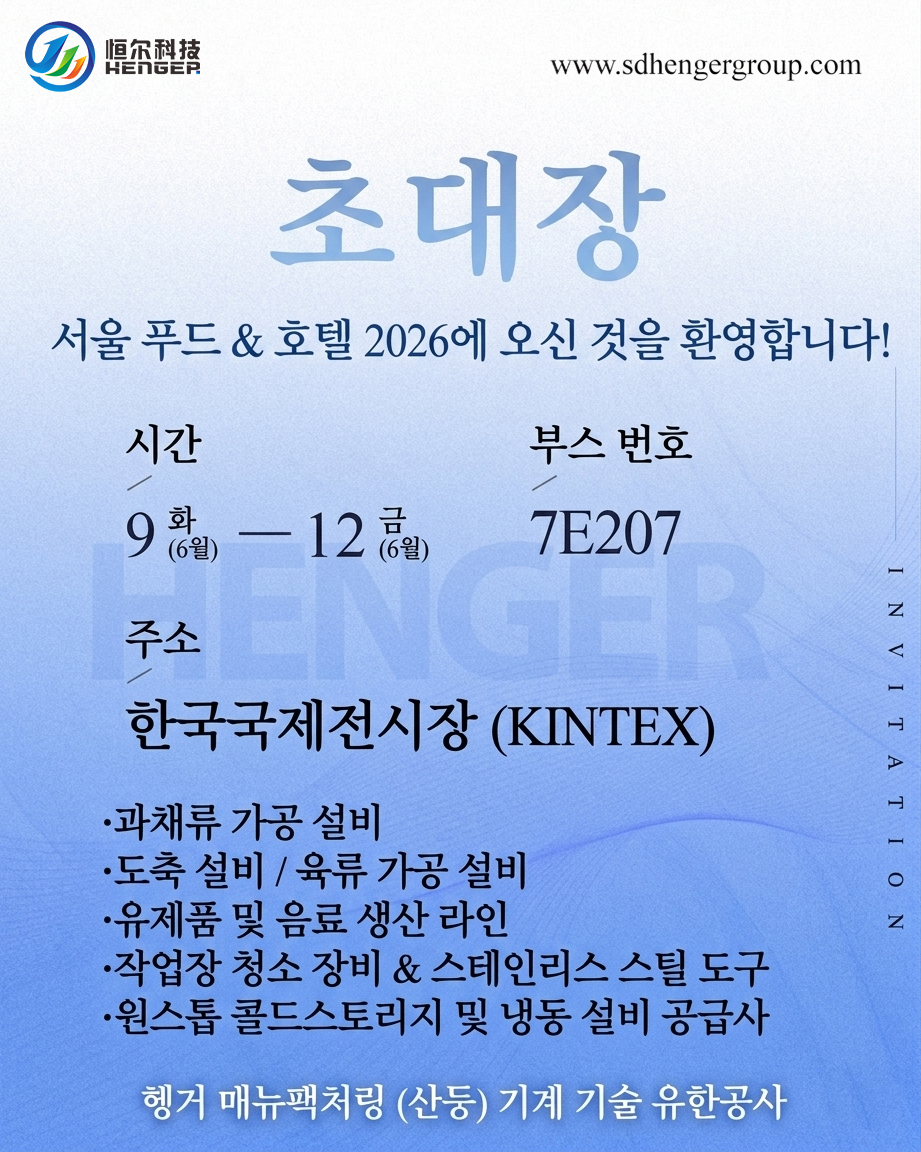 You're Invited: Meet Henger at Seoul Food & Hotel 2026!안녕하세요,We are thrilled to invite you to connect with Henger Manufacturing (Shandong) Machinery Technology Co., Ltd. at the upcoming Seoul Food & Hotel 2026, the premier food processing and hospitality industry event in South Korea! Event DatCompany Dynamic
