Fruit & Vegetable Washing Line: Organic Produce Compliance & Post-Wash Drying/Sorting Technology for 2026
The global fruit and vegetable processing equipment market is projected to grow from approximately USD 7.1 billion in 2025 to USD 11.03 billion by 2032, reflecting a compound annual growth rate of around 6.5 percent. Within this segment, washing and cleaning equipment accounts for one of the largest shares, driven by expanding demand for fresh-cut salads, ready-to-eat produce, and organic vegetables. As processors expand into organic and export markets, washing lines are no longer judged only on throughput. Buyers now evaluate whether a fruit and vegetable washing line can meet organic compliance limits, reduce water consumption, and deliver a stable downstream product through effective drying and sorting.
This article examines the design priorities for organic-compliant produce washing, compares washing and post-wash technologies, and provides a practical framework for selecting a line configuration in 2026. It also covers the maintenance, water treatment, and supplier support issues that determine long-term operating performance.
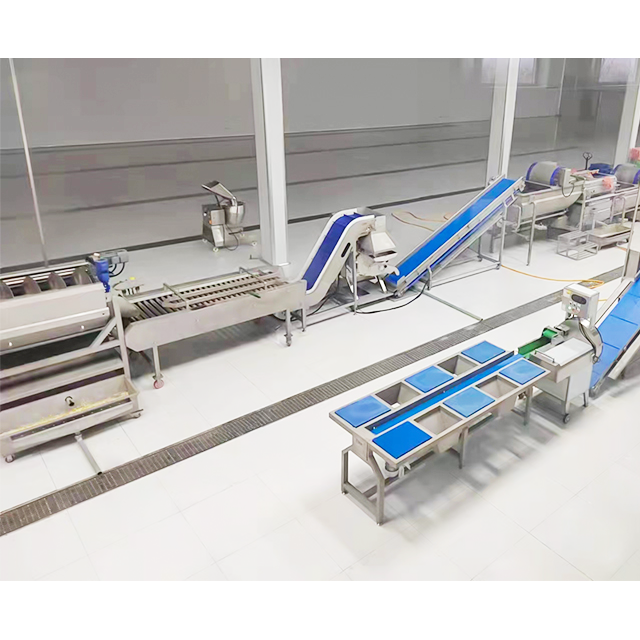
What a Modern Fruit & Vegetable Washing Line Includes
A complete fruit and vegetable washing line is a continuous processing system that prepares raw produce for retail, food service, or further processing. A typical configuration includes receiving, pre-soaking, soil removal, washing, rinsing, surface drying, sorting or grading, and packing. The exact sequence changes according to product type. Leafy greens such as lettuce, spinach, and kale require gentle handling and centrifugal dewatering, while root vegetables such as potatoes, carrots, and cassava need abrasive brush action and higher-pressure spray to remove soil.
Henger Manufacturing offers washing and processing equipment built with SUS304 stainless steel, food-grade brush rollers, and modular layouts. Brush-type potato washing and peeling machines, for example, use rotary abrasive brushes combined with high-pressure spray nozzles to scrub soil and peel root crops in a single pass. This type of mechanical action is widely adopted for tubers and rhizomes because it delivers consistent results with limited manual labor.
Washing Technology Selection: Bubble, Brush, Spray, and Ultrasonic
Processors can choose from four main washing methods, each suited to specific produce categories and contamination types.
Bubble Washing
Bubble washers generate turbulent water through air injection. The gentle agitation removes loose soil and floating debris without bruising delicate products. Bubble washing is well-suited for leafy greens, berries, and cut vegetables. The key design parameter is air flow rate: too little flow leaves soil attached, while excessive turbulence can damage fragile tissue and increase turbidity.
Brush Washing
Brush washers use rotary nylon or abrasive rollers to scrub root vegetables, potatoes, and ginger. Brush density, roller speed, and spray pressure determine peeling intensity and throughput. For organic produce, brush systems should allow quick roller replacement and cleaning to prevent cross-contamination between conventional and organic batches.
Spray Washing
High-pressure spray arches are often installed after immersion washers to rinse residual soil and wash water from product surfaces. Spray bars are effective at removing adhered particles and are commonly integrated before drying and optical sorting stages.
Ultrasonic Washing
Ultrasonic cleaning uses high-frequency sound waves to create cavitation bubbles in the wash tank. This method can remove pesticide residues and soil particles from crevices and irregular surfaces. For organic processors, ultrasonic washing reduces dependence on chemical sanitizers, although it is usually paired with other washing stages to achieve commercial throughput.
Practical design note: most facilities combine two or more washing stages. A root vegetable line often runs brush washing followed by spray rinsing, while a leafy green line uses bubble washing followed by centrifugal dewatering.
Organic Produce Compliance: What Equipment Buyers Should Know
Organic certification places specific limits on substances that may contact produce. Under USDA National Organic Program rules and EU organic regulations, synthetic sanitizers such as chlorine and chlorine dioxide are restricted or prohibited in many applications. Processors serving organic markets should therefore design washing lines that maintain microbiological control without relying on conventional chemical disinfection.
Accepted alternatives include ozone dissolved in wash water, ultraviolet light treatment, and organic-approved sanitizers such as peracetic acid blends listed for organic handling. Water quality becomes critical. Wash water should be filtered, recirculated through a controlled loop, and monitored for organic load and microbial indicators. Tanks, pumps, and pipework should be cleanable and constructed from food-grade materials to avoid contamination.
For facilities that handle both conventional and organic products, physical separation of washing stages or scheduled production sequences reduces the risk of conventional residues migrating into organic lots. Quick-change nozzles, removable brush rollers, and sloped tanks that drain completely all support compliance.
Beyond organic rules, food safety programs such as HACCP and FSMA require documented controls for wash water temperature, contact time, and microbial testing. A washing line designed with sampling ports, accessible filters, and automated dosing points for approved sanitizers makes documentation and verification easier. Processors should treat the washing line as a controlled processing step rather than a simple cleaning operation.
Post-Wash Drying: Air Knife vs. Centrifugal Dewatering
Removing surface water before packaging is essential for shelf life and downstream handling. Excess moisture promotes microbial growth and can dilute coatings or seasonings applied in later stages. Two drying methods are widely used in the market.
Air Knife Drying
Air knife systems use a high-velocity curtain of filtered air to blow water off the product surface as it travels on a conveyor. Air knives are widely used for root vegetables, tomatoes, and peppers. They are energy-intensive, so efficient blower selection and heat recovery can reduce operating cost. Multiple air knives arranged at different angles improve coverage.
Centrifugal Dewatering
Centrifugal dryers spin product baskets to remove water by centrifugal force. They are the standard choice for leafy greens and fresh-cut vegetables because mechanical blowing alone cannot remove water trapped in leaf folds. Basket loading, spin speed, and cycle time should be balanced to avoid bruising. Modern units include variable frequency drives and automated basket handling to reduce labor.
Some lines also use vibratory dewatering shakers as a pre-drying step before air knives or centrifugal units. These shakers remove free water quickly and reduce the load on downstream drying equipment.
Post-Wash Sorting and Grading
After washing and drying, produce passes through sorting and grading equipment. Camera-based optical sorters inspect each item for color, size, shape, and surface defects. Machine vision systems can separate damaged, discolored, or undersized pieces from the main product stream. Weight graders add another layer of consistency for packed retail products.
Integration matters. Optical sorters perform best when product is evenly spaced, uniformly lit, and free from surface water. This is why effective drying placed immediately before the sorting stage improves overall sorting accuracy. Some processors also install metal detectors or foreign-object detection systems after sorting to meet retailer requirements.
Capacity Planning: Four Tiers for Produce Washing Lines
| Capacity Tier | Typical Throughput | Primary Equipment | Typical Users |
|---|---|---|---|
| Small Farm / Packing Shed | 300–800 kg/h | Single bubble or brush washer, manual transfer, air knife | Small farms, organic cooperatives |
| Medium Fresh-Cut Facility | 1,000–2,500 kg/h | Bubble washer, spray rinse, centrifugal dryer, manual sorting | Salad processors, central kitchens |
| Large Processing Plant | 3,000–6,000 kg/h | Multi-stage wash, brush or ultrasonic, air knife, optical sorter | Large fresh-cut factories, exporters |
| Distribution Hub | 8,000+ kg/h | Parallel washing lines, automated drying, multi-lane sorting, integrated packing | National distribution centers, commodity packers |
Five Industry Trends Shaping Produce Washing in 2026
- Sanitizer-free and organic-compliant washing. Regulatory and consumer pressure is driving wider adoption of ozone, UV, and ultrasonic technologies that reduce chemical inputs while maintaining food safety.
- Closed-loop water recycling. Water scarcity and discharge limits are pushing processors to install filtration, sedimentation, and reuse systems. Recirculating wash water can cut freshwater consumption by 40 to 70 percent in well-designed lines.
- Integrated wash-dry-sort lines. Buyers increasingly specify complete lines from a single supplier to reduce interface problems and simplify commissioning. Lines that combine washing, drying, and sorting in one controlled sequence are gaining traction.
- Energy-efficient drying. Variable-speed blowers, heat recovery on air knife systems, and shorter centrifugal cycles help reduce electricity use as energy costs remain a significant operating expense.
- Optical sorting and defect detection. Camera-based sorters with improved software are improving defect detection rates and reducing false rejects. Integration with upstream drying improves performance and reduces giveaway.
Five Common Design and Purchasing Errors
- Underestimating water treatment requirements. A washing line is only as clean as its water. Facilities that omit filtration and recirculation controls often struggle with turbidity and microbial counts.
- Specifying a single washer for all products. Root vegetables and leafy greens need different mechanical handling. A line designed only for one product type can damage delicate items or under-clean hardy crops.
- Ignoring drying capacity. Under-sized dryers create bottlenecks, leave excess moisture on produce, and reduce the accuracy of downstream optical sorting.
- Overlooking organic separation. Facilities handling both conventional and organic produce need either physical separation or rigorous cleaning protocols to avoid cross-contact.
- Choosing equipment that is hard to clean. Welded frames, inaccessible corners, and non-removable rollers increase cleaning time and compliance risk. Sanitary design with sloped surfaces and quick-release components is essential.
Selecting a Fruit & Vegetable Washing Line Supplier
When evaluating suppliers, processors should look beyond throughput claims and examine how the equipment fits the full workflow. Key questions include: Does the supplier offer multiple washing technologies to match different produce types? Can the line be configured for organic production with chemical-free sanitation options? Is the drying stage sized for the target product, including leafy greens that need centrifugal dewatering? What level of optical sorting and foreign-object detection is available? And how easy is the equipment to clean between conventional and organic batches?
Site acceptance testing should verify wash water quality, drying performance, and sorting accuracy using the actual products that will run in production. A supplier with experience in integrated line design can help avoid the interface problems that occur when washers, dryers, and sorters are sourced separately. Spare parts availability, operator training, and responsive technical support are also important because downtime in a washing line can affect product quality and shelf life.
Conclusion
Organic compliance, post-wash drying, and optical sorting are now central to fruit and vegetable washing line design. As the market for processed produce expands, processors need washing systems that handle diverse products, meet strict certification rules, and deliver a dry, clean product ready for retail or further processing. By selecting the right combination of washing, drying, and sorting technologies, and by avoiding common design errors, buyers can build a line that supports both current requirements and future market growth.