Food Processing Cleaning Equipment 2026: Water Stewardship, Chemical Dosing & Hygiene-Zone Compliance
Sanitation is no longer treated as a support function in food processing. Regulators, retail auditors, and export customers now expect documented hygiene control from the moment personnel enter a facility until the last crate leaves the dispatch area. This shift has turned industrial cleaning equipment into a compliance asset, with buyers evaluating water use, chemical dosing accuracy, and hygiene-zone design alongside throughput and stainless steel construction.
The global food industry cleaning systems market was valued at approximately USD 10.35 billion in 2025 and is projected to reach USD 17.57 billion by 2032, reflecting a compound annual growth rate of around 7.85%. Within this space, industrial footwear cleaning machines are forecast to grow from USD 850.50 million in 2025 to USD 1.65 billion by 2032 at a 9.93% CAGR, while boot washer demand remains steady at a 5.6% CAGR. These figures show that plants are investing in controlled-entry hygiene, reusable container cleaning, and targeted foam sanitation at the same time.
This article looks at food processing cleaning equipment from a 2026 compliance perspective. It covers the main equipment categories, water stewardship strategies, chemical dosing control, applicable regulatory frameworks, capacity planning, current trends, common specification errors, and what to look for when selecting a supplier.
Why Cleaning Equipment Is Now a Compliance Asset
Food safety plans such as HACCP, IFS, and FSMA preventive controls require plants to manage biological, chemical, and physical hazards at every transition point. Cleaning equipment sits at the centre of several of these transitions: the boundary between raw and cooked areas, the entry from changing rooms to production halls, and the reuse loop for crates, pallets, and smokehouse trolleys.
When cleaning equipment is well specified, it reduces the risk of cross-contamination, cuts water and chemical consumption, and creates an auditable record of sanitation cycles. When it is poorly specified, it becomes a hidden source of variability: inconsistent boot disinfection, recycled water that spreads rather than removes soil, and foam stations that overdose chemicals into drains. In 2026, the procurement decision is therefore as much about environmental compliance and hygiene-zone integrity as it is about buying a washer or a boot scrubber.
Equipment Categories and Their Environmental Footprint
Personnel Hygiene Stations
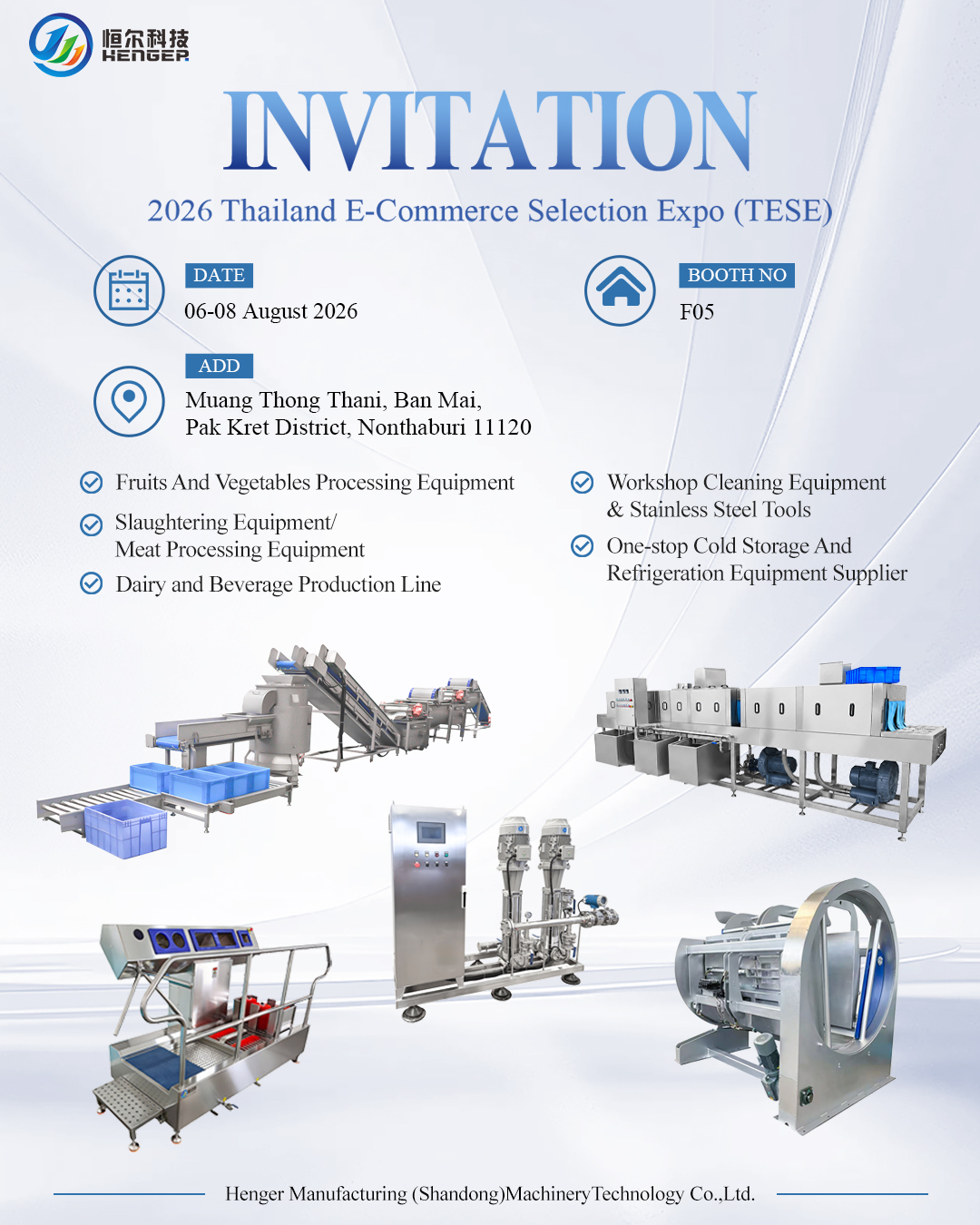
Personnel hygiene stations control the first contamination pathway: the workforce. A typical station combines a boot washer, hand sanitiser dispenser, and access-control gate so that employees cannot enter a high-care area until both footwear and hands have passed through the required steps. SD Henger Group supplies stainless steel hygiene stations designed for food factories, pharmaceutical workshops, and industrial environments, with automatic induction control and modular configurations.
From a compliance viewpoint, the key parameters are throughput, water temperature, brush pressure, disinfectant contact time, and drainability. A standard passage rate of 10 to 15 people per minute is typical for automatic units. Water should be supplied at a temperature and pressure that removes debris without aerosolising contaminants, while the station base needs sloped drainage to prevent pooling.
Crate, Basket and Tunnel Washers
Crate and tunnel washers handle the second major contamination pathway: reusable containers. SD Henger Group builds tunnel-type box washing machines with SUS304 stainless steel frames and tanks, multi-stage high-pressure spraying, and conveyor systems rated up to 1,000 crates per hour. The units use a dual-chain design for stable transport and a double filtration system to extend water life.
Water recycling is built into these machines rather than added afterwards. Wash water passes through screens and filters, returns to a heated tank, and is reused across multiple cycles before discharge. This design directly reduces both freshwater demand and effluent volume, which matters in regions where trade effluent permits cap discharge flow or chemical oxygen demand.
Foam Cleaning and High-Pressure Units
Foam cleaning machines apply detergent as a clinging foam, allow a controlled contact time, and then rinse with high-pressure water. SD Henger Group offers a mobile 3-in-1 unit that combines high-pressure rinsing, foam cleaning, and spray disinfection in a 304 stainless steel frame. The model operates at 9 to 10 MPa working pressure with a 25-metre hose and 4 kW power supply, drawing inlet water at 0.25 MPa.
The environmental benefit comes from precise chemical dosing. When foam concentration is controlled, operators use only the detergent needed for the soil load, reducing both chemical purchase and effluent treatment load. Mobile units also allow sanitation teams to move equipment to where it is needed, rather than installing fixed stations in every corner of the plant.
Smokehouse Trolley and Cart Washers
Smokehouse trolleys and meat frames accumulate fat, protein, and smoke residues that are difficult to remove manually. SD Henger Group manufactures smoked trolley cart washers with high-pressure and foam spraying, water temperatures up to 85°C, and a cleaning pressure range of 3 to 6 bar. Throughput can reach 50 to 60 carts per hour depending on cart dimensions and cycle settings.
These washers typically consume 150 to 300 litres of water per hour, with a recirculation and filtration system that reuses rinse water. Because the soil load is heavy, effective filtration and regular tank cleaning are essential; otherwise the recirculated water simply redistributes grease onto the next batch of trolleys.
Water Stewardship in Cleaning Operations
Water stewardship in food plant cleaning rests on four practices: source reduction, countercurrent reuse, filtration, and monitoring. Dry removal of debris before wet cleaning can cut wastewater volume by 25 to 35%. Multi-tank countercurrent circuits, where fresh water enters at the final rinse stage and then cascades to pre-rinse or wash stages, reduce consumption further.
Filtration is the enabler of reuse. A typical crate washer uses a coarse screen followed by a finer media filter or hydrocyclone to remove solids. In hygiene stations, screens collect brush debris and shoe-soil particles. In all cases, turbidity or conductivity sensors help decide when water should be discharged rather than reused. Some plants target reuse rates of 40 to 60% for non-product-contact wash water, while closed-loop crate washers in water-scarce regions can push reuse above 80%.
Key insight: Water recycling in cleaning equipment only works when filtration, temperature control, and discharge triggers are sized as a system. Reusing dirty water without adequate solids removal turns a sanitation asset into a cross-contamination risk.
Chemical Dosing Control & Recovery
Cleaning chemicals represent both an operating cost and an effluent concern. Caustic soda, nitric acid, peracetic acid, and chlorinated foams all add to wastewater COD, pH variability, and salt load. An effective response is to dose chemicals according to measured need rather than to eliminate them.
Modern foam stations and CIP skids use conductivity or refractive-index sensors to maintain detergent concentration. This avoids the common practice of overdosing "to be safe," which increases chemical consumption and can leave residues that require extra rinsing. For CIP circuits, membrane-based caustic recovery can reconcentrate spent caustic and return it to the cleaning tank, with recovery rates above 90% reported in dairy and beverage applications.
Chemical compatibility with equipment materials is equally important. Units built from 304 stainless steel resist most food-grade detergents and disinfectants. In plants using highly chlorinated or acidic chemistries, 316 stainless steel may be specified for longer service life. Seals, hoses, and pump housings need to match the full range of cleaning agents used on site.
Energy & Heat Management
Cleaning equipment consumes energy in three ways: water heating, pump operation, and air drying. Hot water improves cleaning efficiency, particularly for fat and protein soils, but heating large wash tanks can become a major electrical or steam load. Energy-efficient designs include insulated tanks, heat recovery from final rinse water, and demand-based heating that raises temperature only when the machine is in use.
Air-knife drying modules, often added to crate washers, remove surface water before crates leave the machine. While drying reduces downstream drip hazards, it adds fan or compressed-air demand. Specifying drying only where food safety or downstream handling requires it helps keep energy use proportionate to the benefit.
Regulatory Frameworks for Hygiene Zones
Food plant cleaning equipment needs to satisfy both machinery safety standards and food hygiene regulations. In the European Union, EN 1672-2 defines hygiene requirements for food machinery, covering surface finish, drainability, material compatibility, and cleanability. EHEDG guidelines and 3-A Sanitary Standards provide additional design and testing guidance, particularly for equipment used in dairy, meat, and beverage processing.
EU Regulation 852/2004 requires food business operators to identify and control hazards at all stages of production, including personnel hygiene and equipment cleaning. The U.S. FDA Food Code sets similar expectations for hand washing, boot washing, and sanitary equipment design. In China, GB 14881-2013 sets general hygienic requirements for food production, including facility layout, personnel hygiene facilities, and cleaning procedures. For export-oriented manufacturers, designing cleaning equipment that can be validated against multiple standards reduces the risk of audit findings in different markets.
CE marking and ISO 9001 certification are common indicators that a supplier follows documented quality and safety processes. SD Henger Group cleaning equipment is built with 304 stainless steel and CE/ISO-compliant quality systems, making it suitable for plants that need to demonstrate regulatory alignment to international customers.
Capacity Planning for Cleaning Equipment
| Scale | Crates/Containers per Day | Personnel Throughput | Typical Configuration |
|---|---|---|---|
| Small plant | Up to 500 | Up to 50 per shift | Single boot washer, manual foam station, small crate washer |
| Medium plant | 500 - 2,000 | 50 - 200 per shift | Integrated hygiene station, tunnel washer, mobile foam unit |
| Large plant | 2,000 - 5,000 | 200 - 500 per shift | Multi-lane hygiene corridor, automated tunnel washer, trolley washer |
| Industrial hub | 5,000+ | 500+ per shift | Centralised CIP/COP supply, multiple tunnel washers, full access control |
Industry Trends Shaping Cleaning Equipment in 2026
- Closed-loop water recycling: Water scarcity and tighter discharge permits are pushing plants to reuse wash water. Equipment with built-in filtration, cascade rinsing, and conductivity-controlled discharge is becoming the default specification in water-stressed regions.
- Concentration-controlled chemical dosing: Foam stations and CIP units are increasingly fitted with sensors that maintain detergent strength within a narrow band, cutting chemical use and effluent load while improving cleaning consistency.
- Touchless and sensor-activated hygiene stations: Automatic boot washers and hand sanitiser stations reduce cross-contamination from shared surfaces and create a more repeatable hygiene sequence at shift changes.
- Mobile and modular sanitation units: Plants serving multiple product lines or expanding production areas prefer foam cleaning machines and portable hygiene stations that can be repositioned without permanent installation.
- Hygienic design certification alignment: Export buyers increasingly ask for equipment that meets EN 1672-2, EHEDG, or 3-A principles. Suppliers that provide documented material certs, surface finish data, and cleanability validation are gaining preference in international procurement.
Common Design & Purchasing Errors
- Ignoring hygiene-zone classification: Equipment placed in a food-contact zone needs a different surface finish and drainability standard than equipment in a splash or non-food zone. Mixing these requirements leads to audit findings and reworking.
- Undersizing water heating and dosing capacity: A hygiene station sized for average shift entry will fail at shift change when 200 workers arrive within 15 minutes. Peak demand should define pump, heater, and chemical reservoir sizing.
- Flat surfaces and poor drainage: Any horizontal surface or recess that traps water can harbour bacteria. Specifying sloped bases, rounded corners, and self-draining hoses is as important as selecting stainless steel.
- Treating cleaning equipment as isolated units: Boot washers, crate washers, and foam stations share water, chemicals, and drainage. Integrating them into the plant's water balance and effluent plan avoids permit surprises later.
- Overlooking electrical and pressure certifications: Motors, pumps, and pressurised components need to match local voltage, frequency, and safety requirements. Ordering a 380V/50Hz unit for a 480V/60Hz site without planning creates commissioning delays.
Selecting a Cleaning Equipment Supplier
A reliable supplier should offer more than a catalogue of washers. The following checklist helps procurement teams evaluate technical capability and long-term support:
- Confirm 304 or 316 stainless steel construction with material certificates and surface finish documentation.
- Verify CE marking and ISO 9001 quality management credentials for international project acceptance.
- Check whether dimensions, voltage, spray pressure, and throughput can be customised for the specific crate, trolley, or personnel flow.
- Ask for export packaging, installation manuals, and remote or on-site commissioning support.
- Evaluate modular design and spare parts availability to reduce downtime over the equipment life.
- Request hygiene validation support, including cleanability data, drainage design rationale, and compliance with EN 1672-2 or EHEDG principles.
Conclusion
Food processing cleaning equipment in 2026 is judged on its ability to protect product safety, reduce water and chemical use, and satisfy an expanding set of hygiene-zone regulations. Whether the application is a boot washer at a facility entrance, a tunnel washer for reusable crates, a foam cleaning unit for production floors, or a trolley washer for smokehouse frames, the specification process should integrate water stewardship, chemical dosing control, and regulatory alignment.
Plants that treat cleaning equipment as part of their environmental compliance and food safety system, rather than as a standalone purchase, are better positioned to pass audits, control operating costs, and meet the hygiene expectations of export customers. SD Henger Group offers CE/ISO-certified cleaning equipment in 304 stainless steel, with customisable configurations for personnel hygiene, container washing, foam cleaning, and trolley sanitation.
Need a cleaning equipment layout for your food plant? Contact SD Henger Group to discuss customisable boot washers, crate washers, foam cleaning stations, and trolley washers designed for hygiene compliance and water-efficient operation.